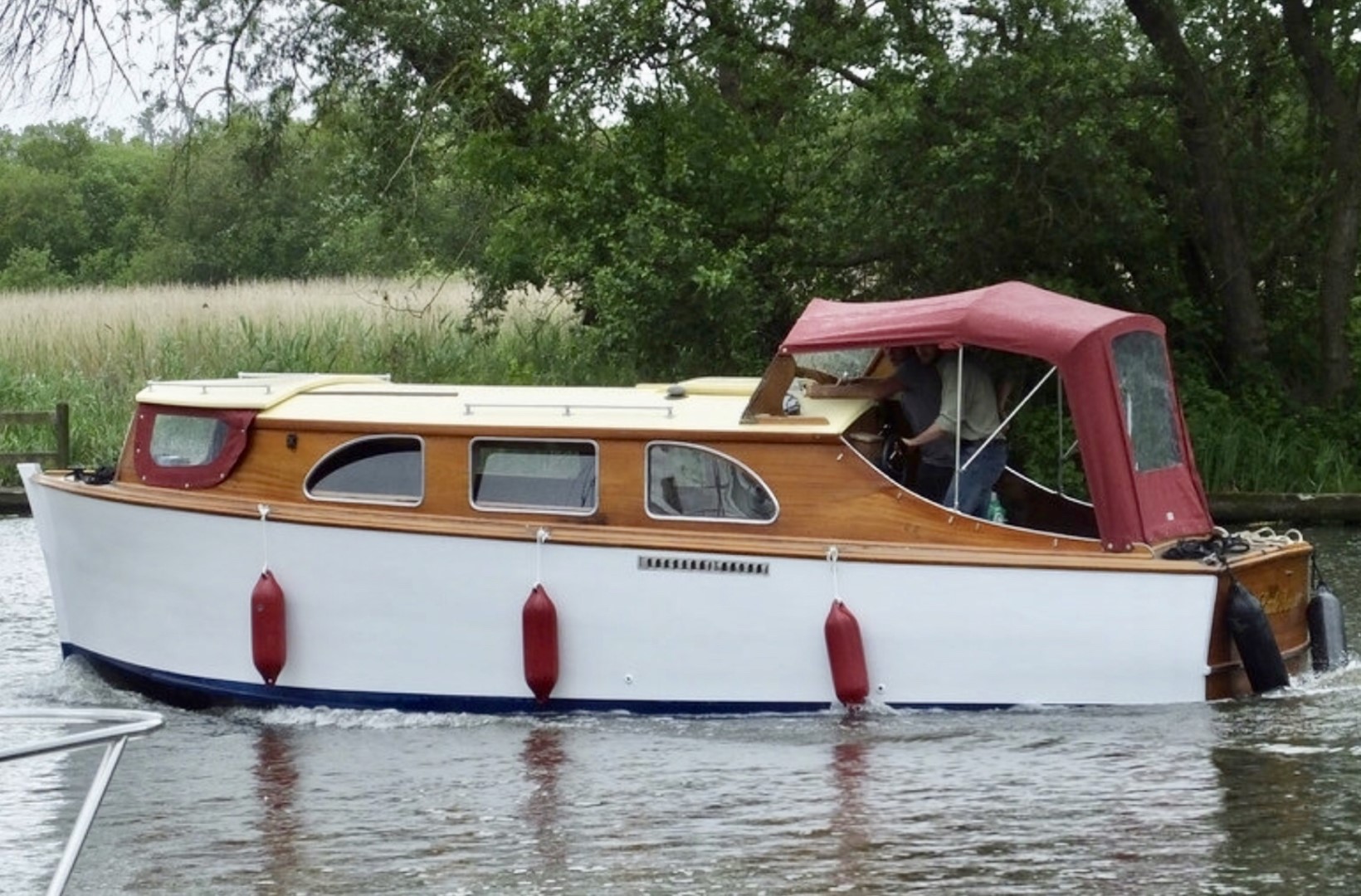
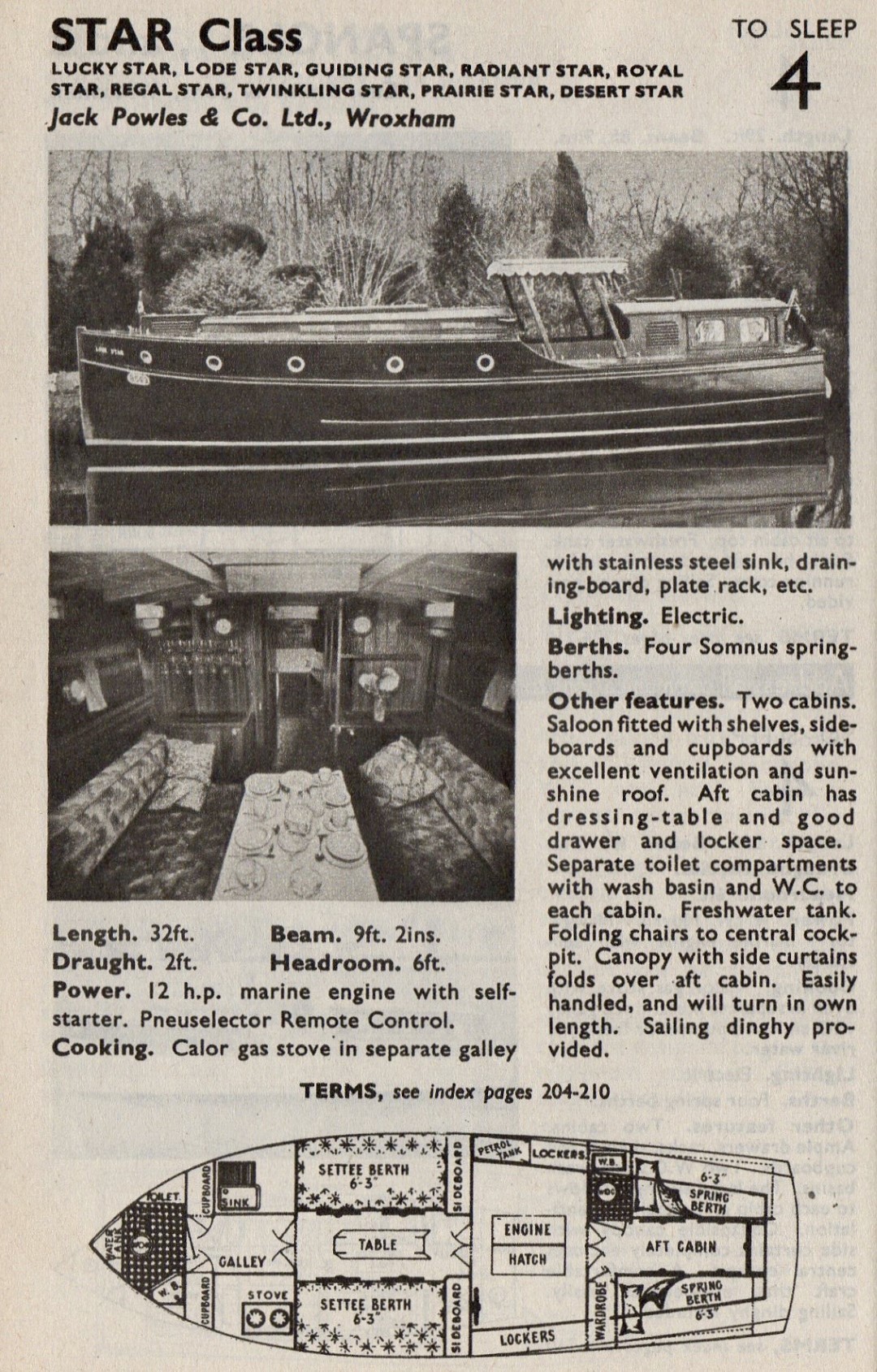
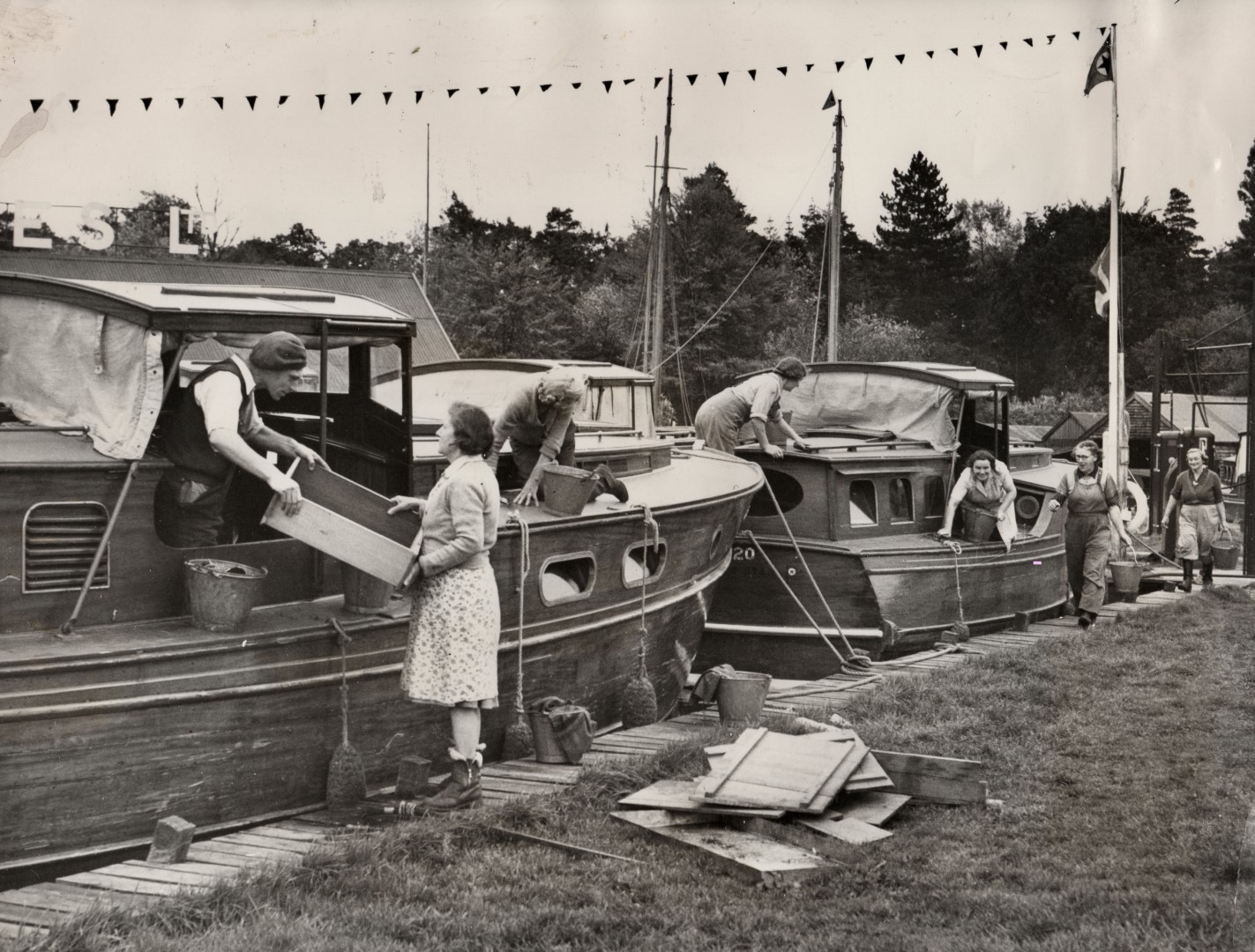
After the war, the boat hire business on the Norfolk Broads resumed and the fleet expanded. Additions included “Desert Star” in January 1948, another 32 foot cruiser in the successful “Star” class.
The team that worked on the construction of new craft included Young Jack, Algie Filby and Chris Goodwin. They started by drawing the boat in full size on the floor in the loft shop. It then took six weeks from completion of the plans until the keel was laid, and a further three months to complete the build. The new “Star” class motor cruisers used the same wooden moulds as used for those built before the war, with the planks then steamed into place. In the age before computers, meticulous precision was needed in their construction, and Jack was always very thorough. For instance, Jack insisted that all the planks had to go into the stem, for maximum strength, whereas those built by Richardsons or Herberts Woods at the time had planks would run out into the deck, thus saving wood.
Eddie Stoughton was General Manager of the yard at this time, supported by Algie Filby.
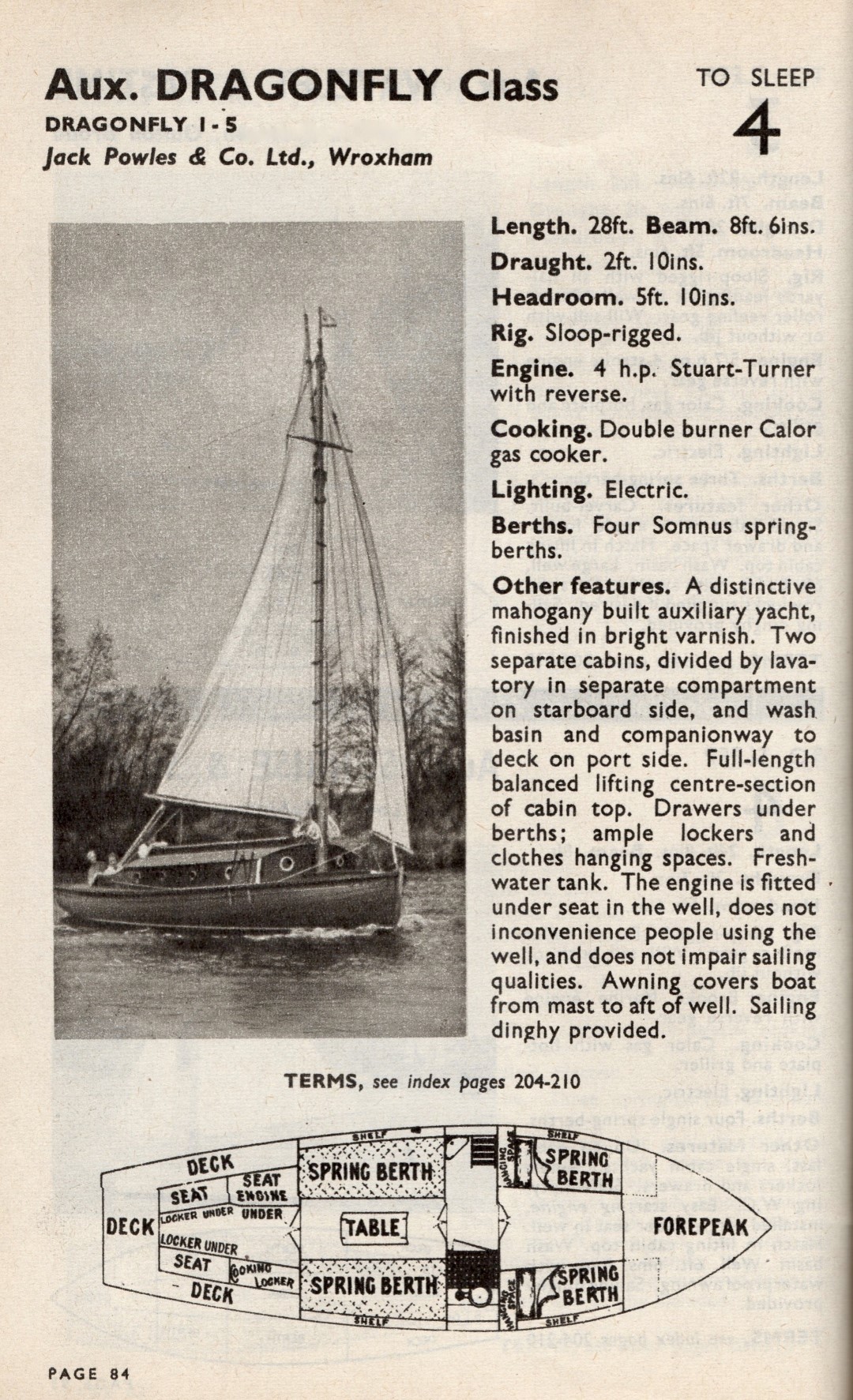
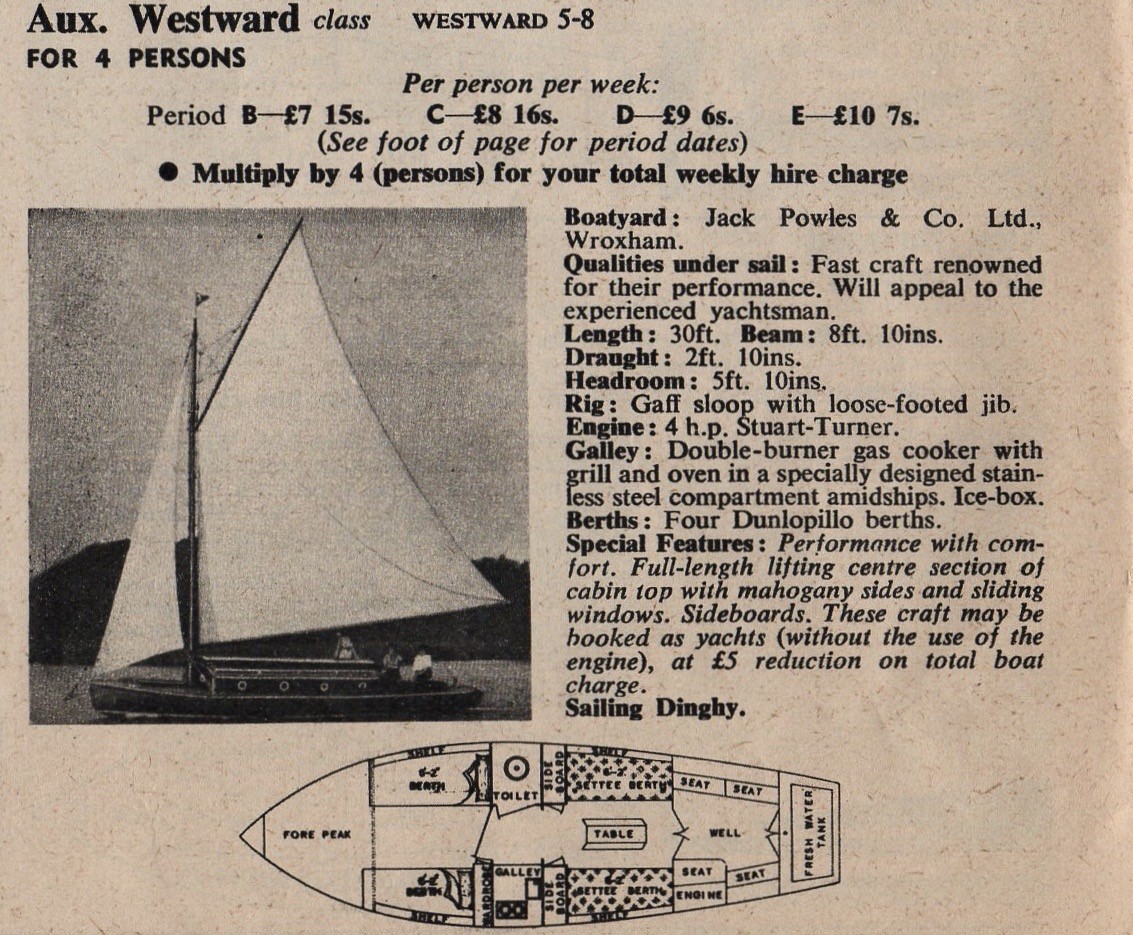
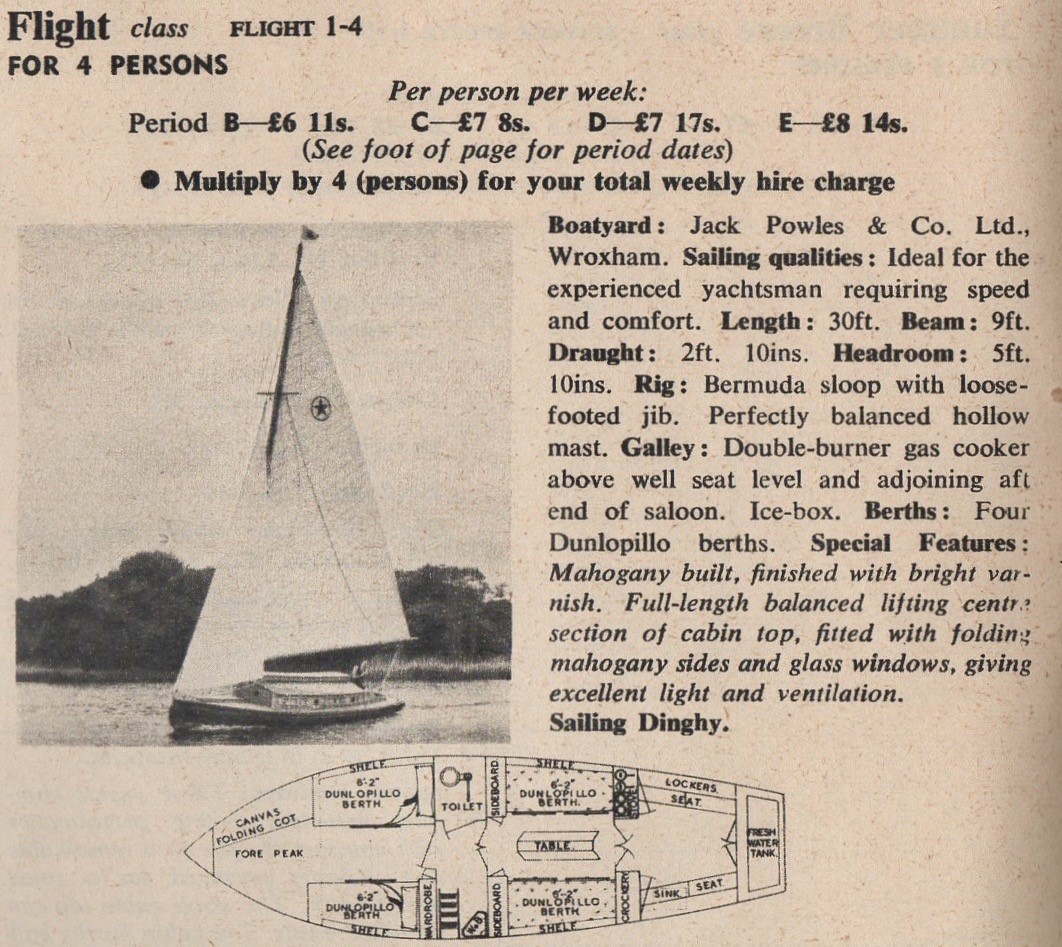
By 1950, the fleet of yachts included the 2 berth “Redwing”, the 3 berth “Fairway” class, carvel built of mahogany, finished in bright varnish, with teak fittings throughout; and the 3 berth “Playmate” class and “Lapwing”. The 4 berth yachts included the four boats in the “Flight” class, “Merry Maid” and “Dusky Maid”. Auxiliary yachts, fitted with 4 h.p.Stuart-Turner engines with reverse gear, included the five boats of the 4 berth “Dragonfly” class; and the three boats of the “Westward” class.
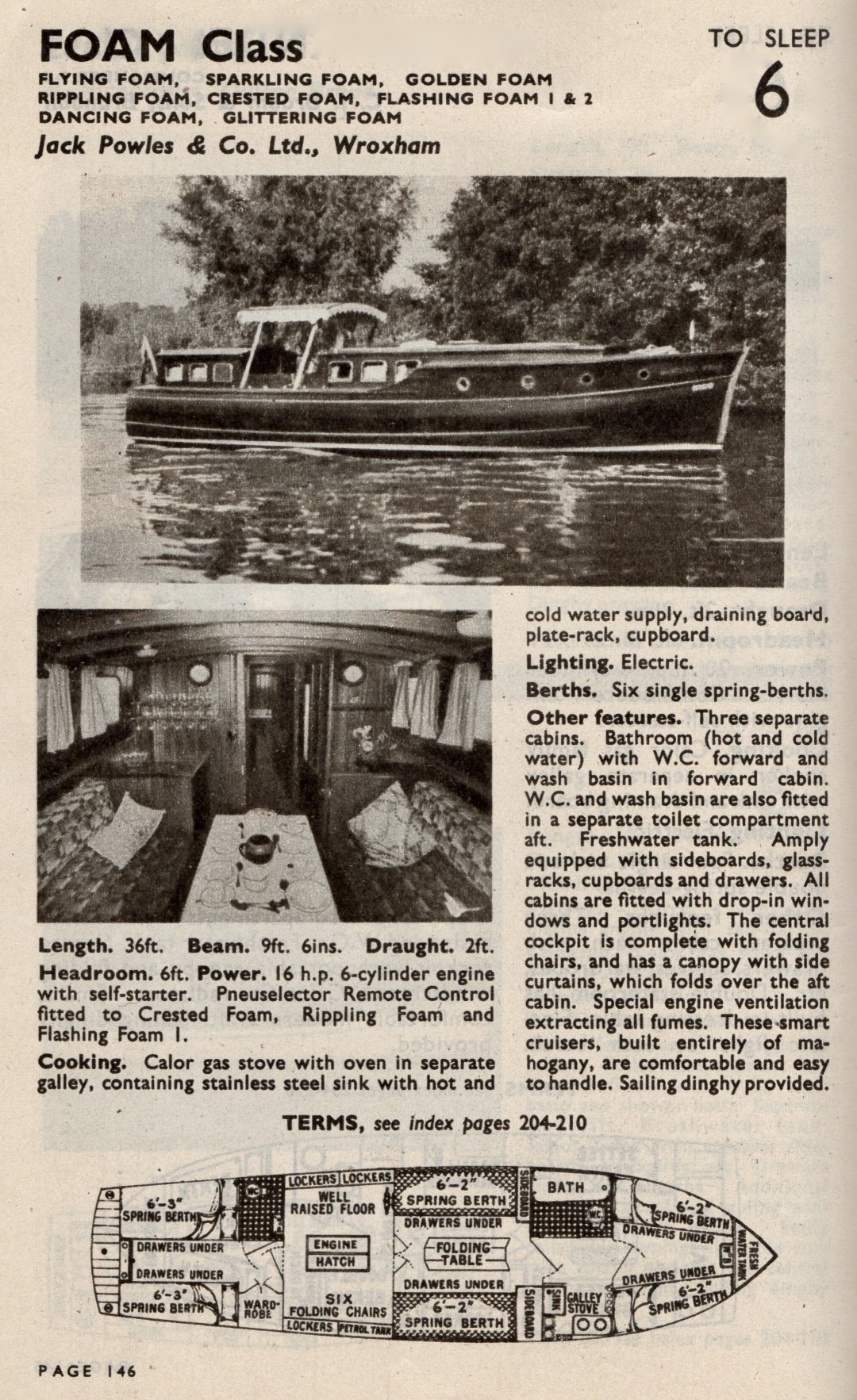
The motor cruisers included the 2 berth “Wanda”; the 3 berth “Sonja”, with a Parsons 10 h.p.Marine engine with electric starter; and the 3 berth “Wendy”. The 4 berth cruisers were the nine individually named craft from the “Star” class, and the largest cruisers in the fleet were the nine individually named, 6 berth craft of the “Foam” class.
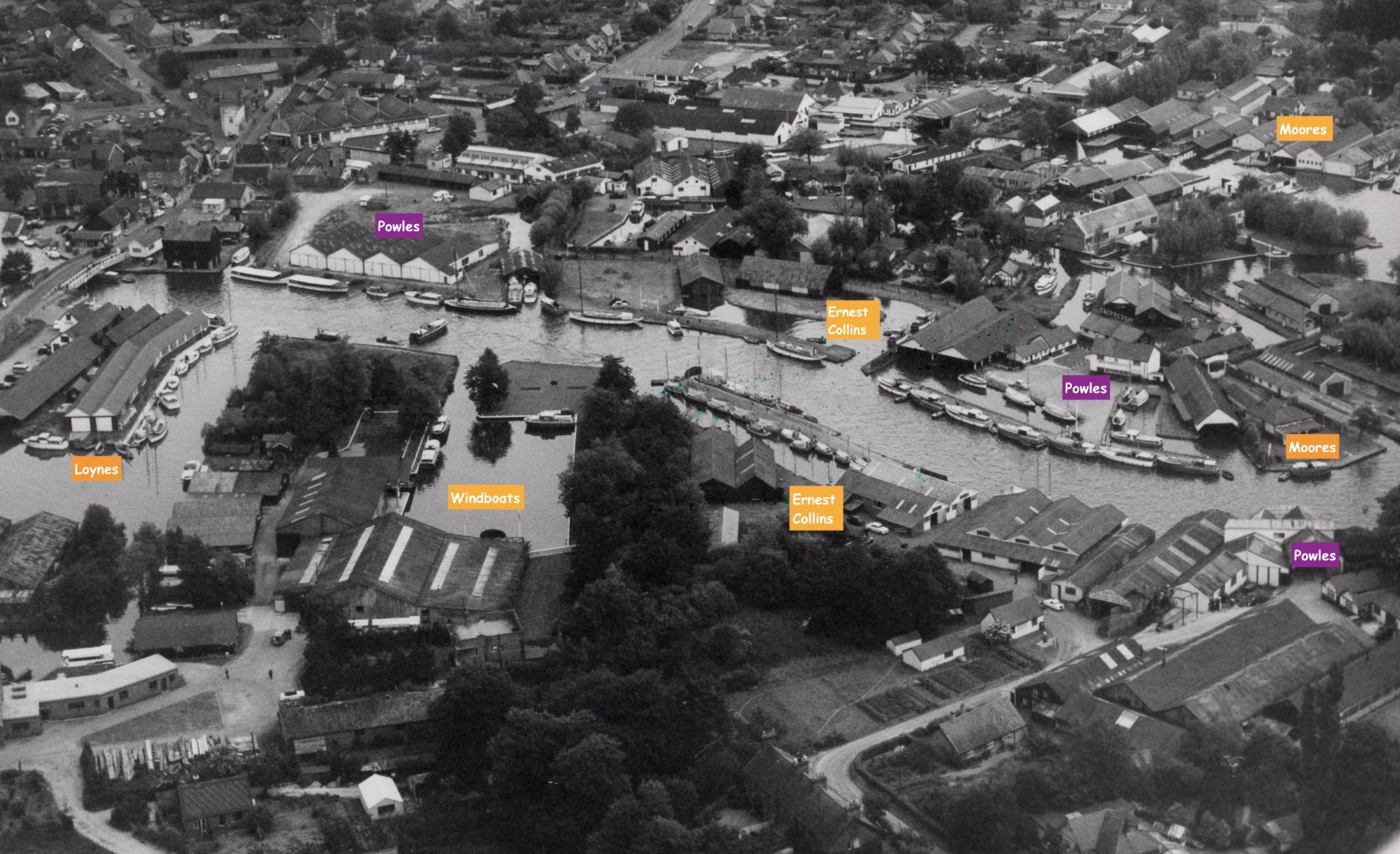
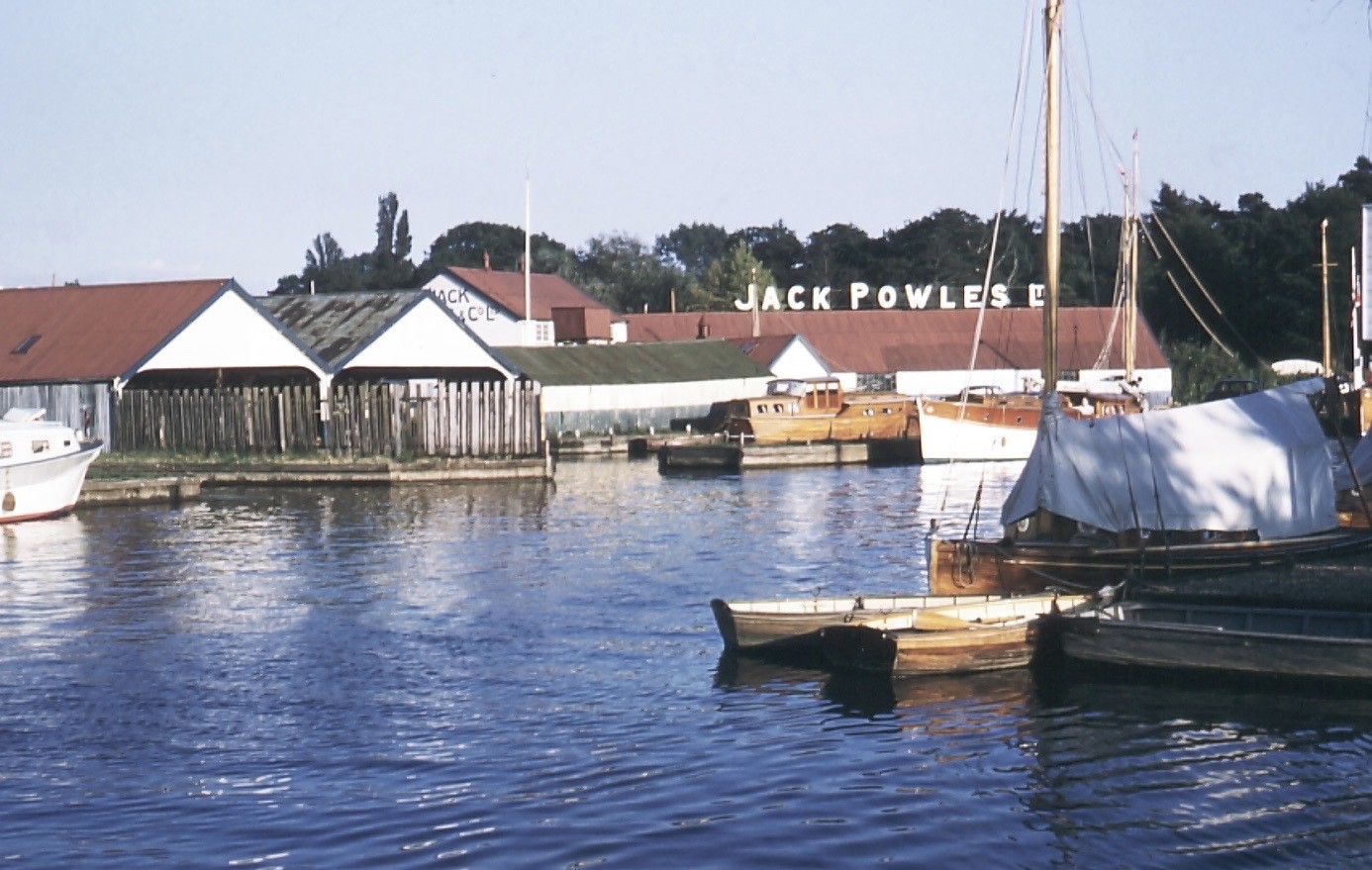
The business was still operating on three sites in Wroxham –on the northern side of the Bure by the bridge where HMS Iolanthe had been based, and where the Hotel Wroxham sits today; and at the bottom of Riverside Road, where Barnes Brinkcraft are based today. On the southern side of the Bure, they also were based at the bottom of Staitheway Road, alongside the Ernest Collins & Sons boatyard.
With a reputation for fine quality river boats, private boat building continued. Jack had planned to build two 16 feet launches, with one for himself, and the keel, stem and transom for “Lucy 1” were formed in 1940. However, these items were hidden in a barn outside Wroxham for the duration of the war, and were only returned to the boatyard in 1954, when “Lucy 1” and “Lucy 2” were completed. They were constructed in mahogany on oak frames and powered by a Sea Wolf 1, 997cc, four cylinder, Ford watermota pre-crossflow petrol engine. Each time Lucy 1 changes hands the original adze, which was used to craft the keel in 1940, has been passed to the new owners.

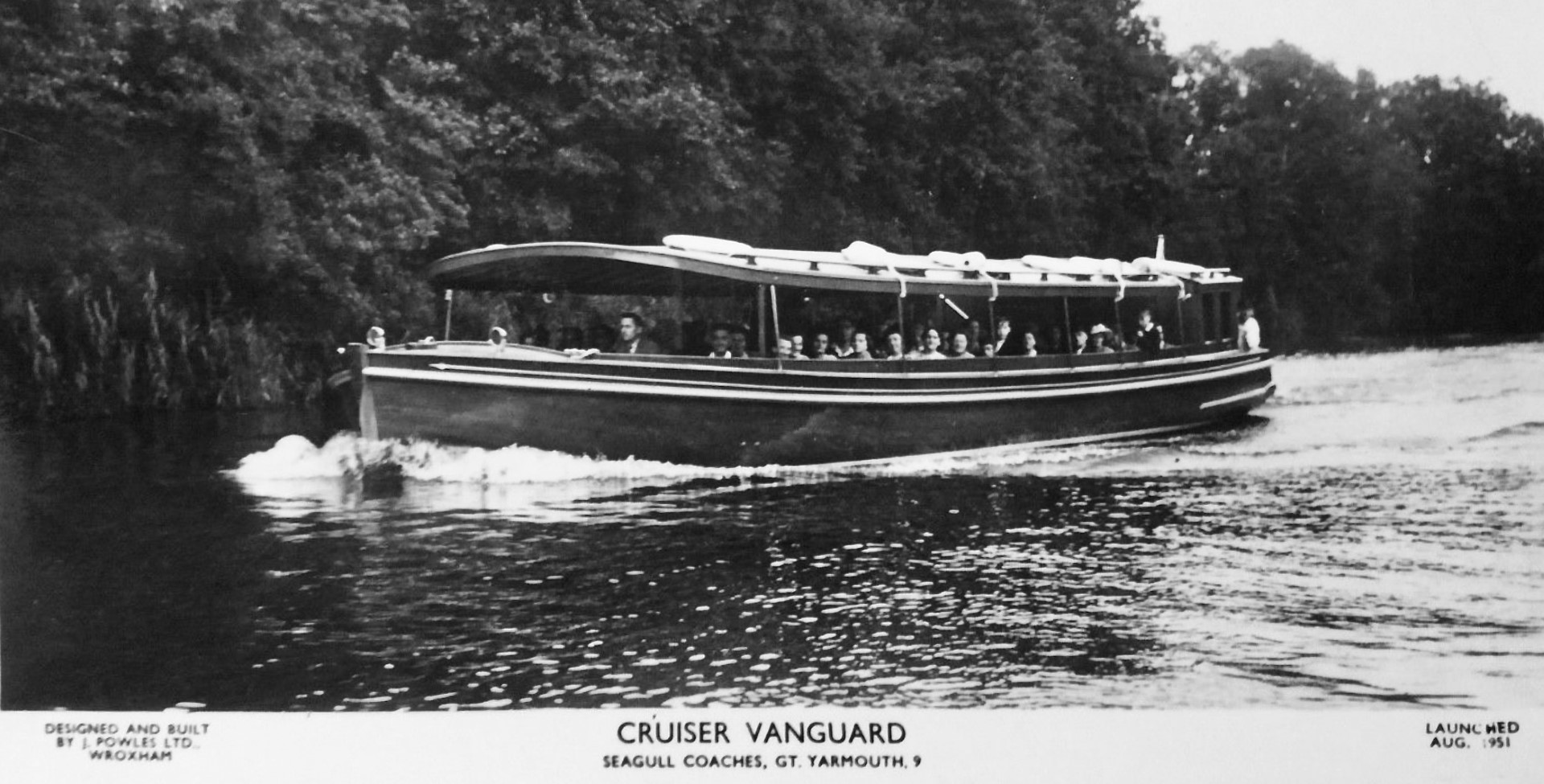
Some of the more unusual commissions for the boatyard included “Vanguard 1”, built for Seagull Coaches of Great Yarmouth as an additional passenger boat in 1951, and its sister ship “Vanguard 2” in 1952. The Carvers offered ‘mystery tours’ that involved bringing customers by coach from Yarmouth, then a tour by boat. The craft were based at and operated from the moorings in front of Powles’ four span boatshed, just by Wroxham Bridge, until they were sold in 1967 to Charles Hannaford and joined the Broads Tours fleet, on the other side of the bridge.
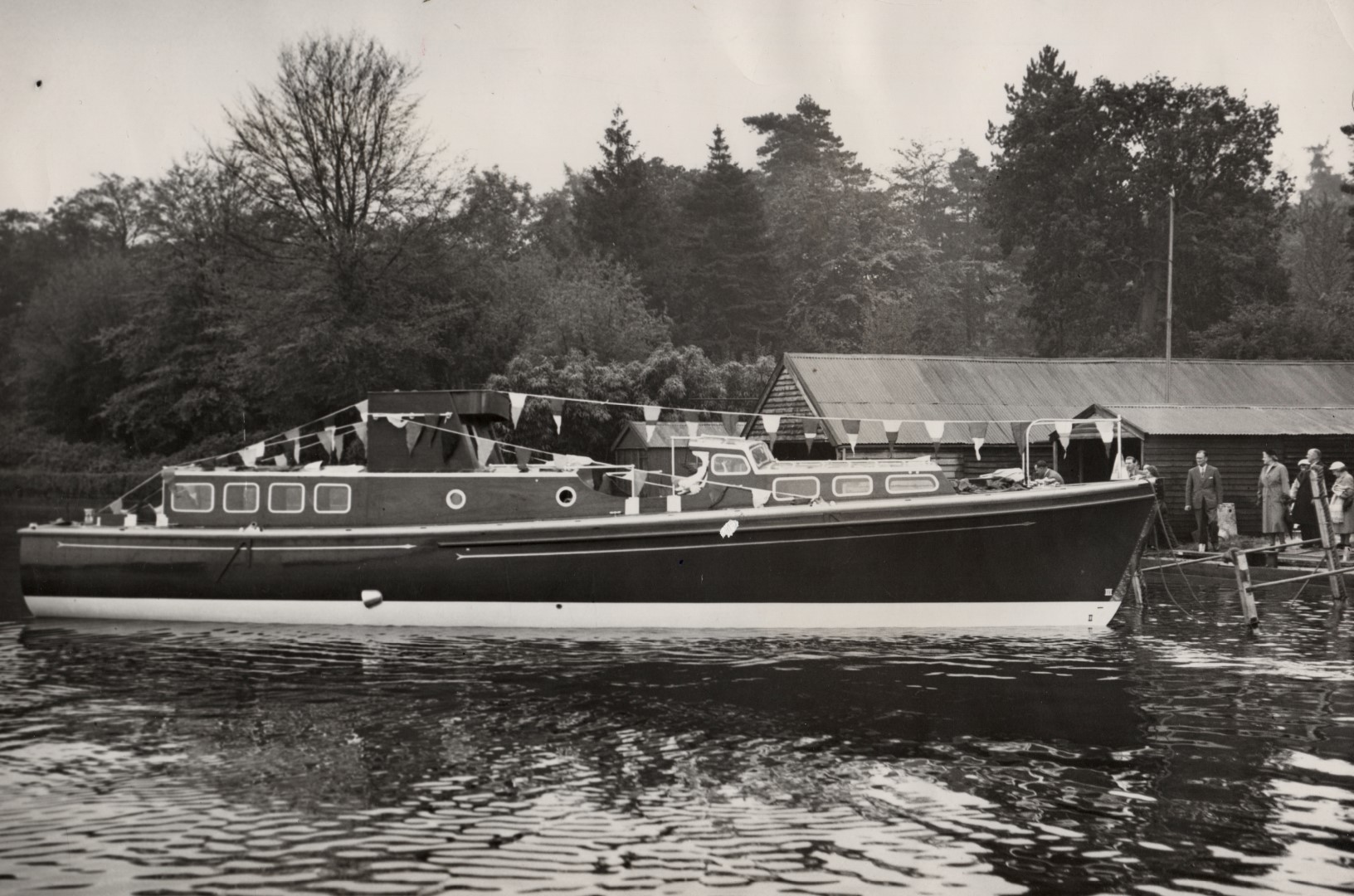
In 1956, Jack set about building two large launches. The first was a replacement for the Police Launch “A2” for Norfolk County Constabulary. The updated “A2” included a Thorneycroft diesel engine, radio, kettle and toilet.
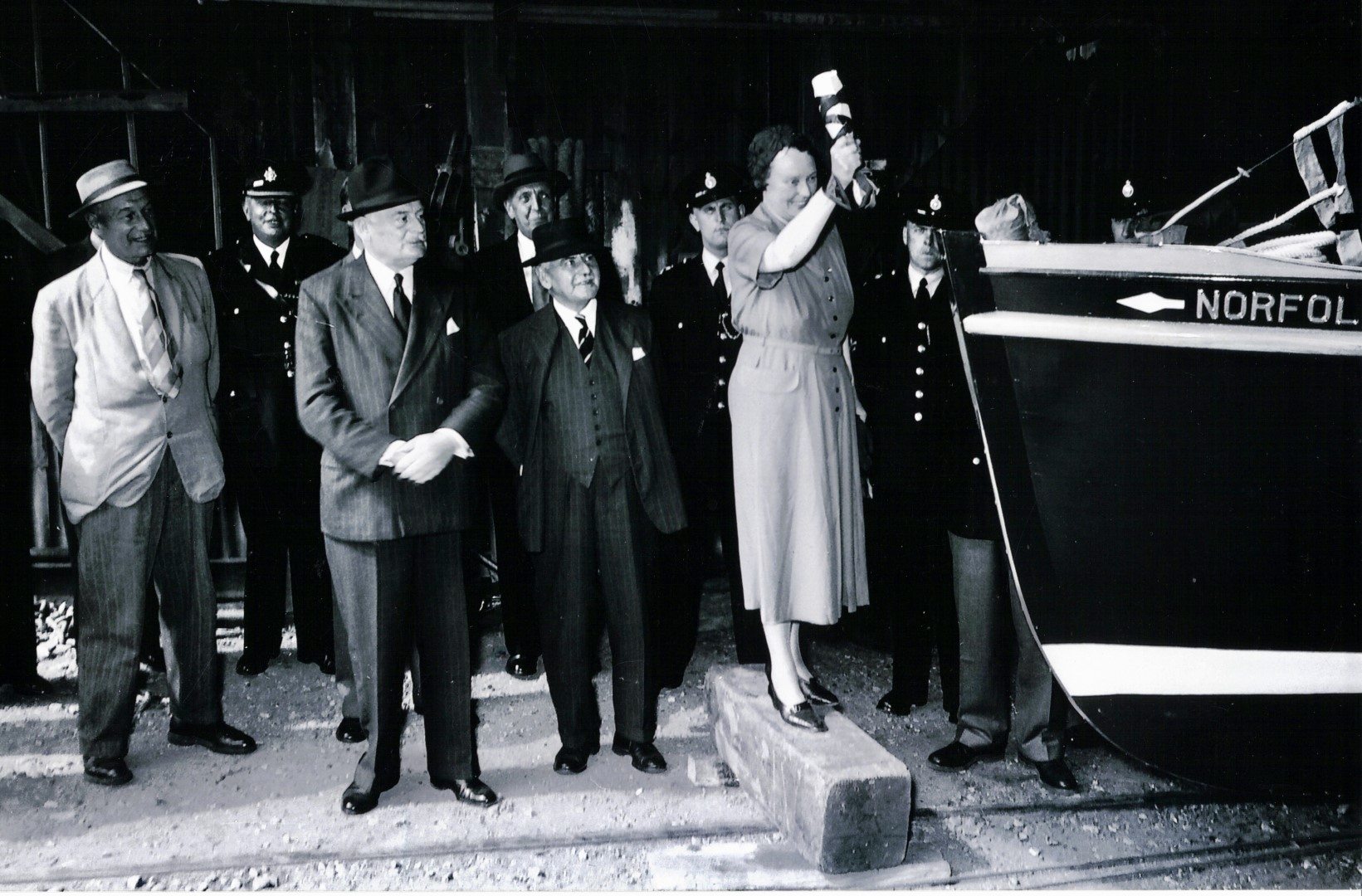
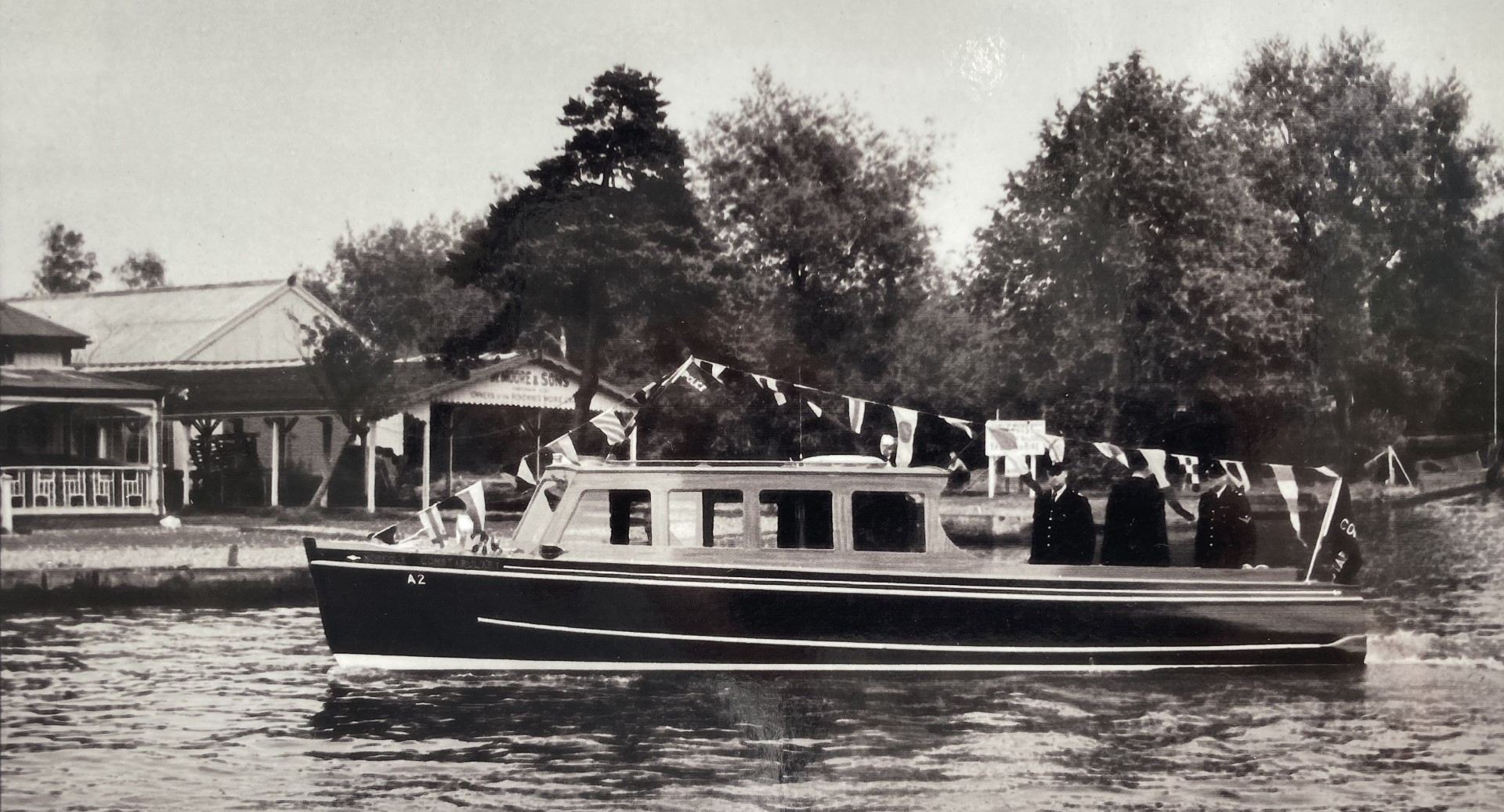
The second planned launch turned into a commission from the Admiralty for a Royal Barge, that had to follow very bespoke specifications, including lowland green paint for the hull. Jack included a small bulldog at the top of the bow jackstaff as a mascot.
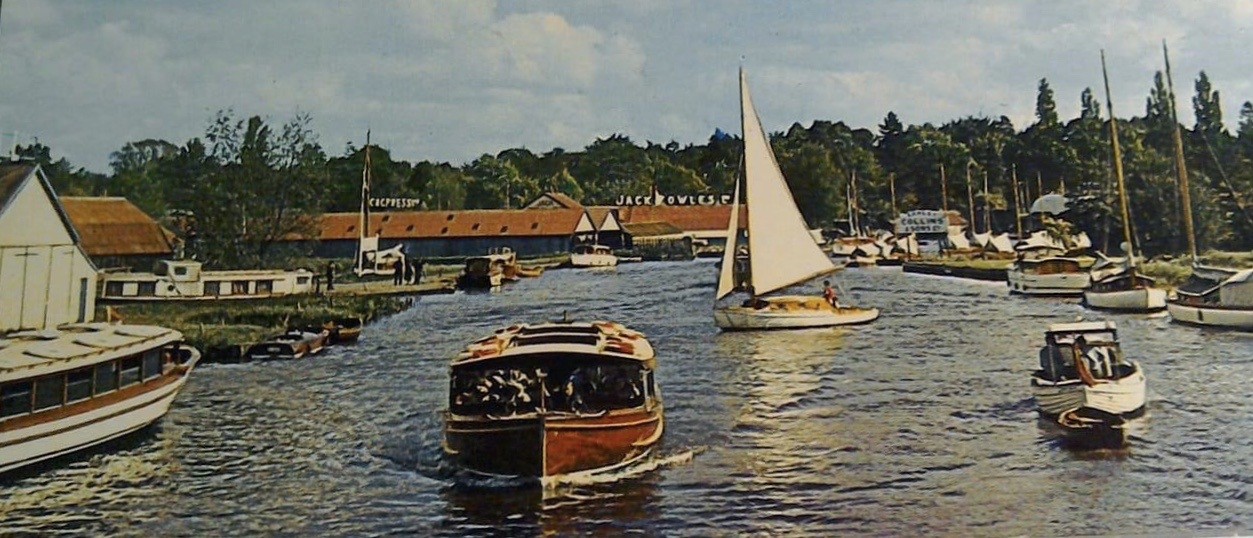
By 1962, Jack Powles had 54 craft in its hire fleet, including 25 yachts – these included popular auxiliary yachts such as “Wanderbird”, “Dragonfly” and “Westward”, as well traditional yachts such as the two berth “Redwing”, complete with an optional outboard motor for just 85/- a week extra. The first four of the “Westward” class were changed from gaff rigs to Bermudan rigs and re-named the “Flight” class.
The last yachts that were built in the yard for the hire fleet, and the only two to be built after the war, were “Sun Glory 1 and 2” , 27 feet auxiliary yachts with three berths, Bermuda sloop, and described as “a fine craft to delight the enthusiast yachtsman”.
The motor cruisers included five of the mahogany built “Water Gypsy”, with two cockpits and dual steering – an unusual feature at the time. They also operated seven of the “Foam” class and ten of the “Star” class, two of which now had diesel engines.