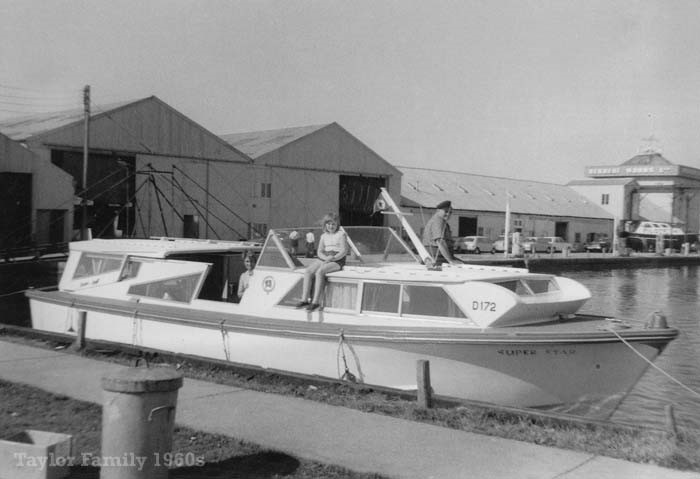
Interest in holidays on the Broads continued to grow, with increasing demand for motor cruisers over the traditional yachts.
To meet this demand, new timber hulled cruisers built within the yard for the hire fleet included “Star Premiere” – a 34 foot centre cockpit cruiser, each with a marine diesel engine, Electrolux refrigerator and Courier gas cooker. Four of these were built and the first of this class was exhibited on the Blakes stand at the 1960 National Boat Show.

At this time, Powles were agents for the Parsons Engineering Company, with their range of marine engines and the “Marinomatic” reverse gear, with single level control. These gear boxes proved to be an absolute nightmare for the fleet, as they would often struggle to engage properly, and ultimately they gave up the agency and moved over to BorgWarner.
In October 1962, Jack’s grandson, John Williams, joined the Powles family business, aged just 22. After leaving Stowe school, John had gone to Bedford to join a prestigious company, to complete a HND in Engineering. As part of this four year “on the job” training, John had spent time in various departments, including accounts, which gave him a great insight into running a business from a financial perspective.
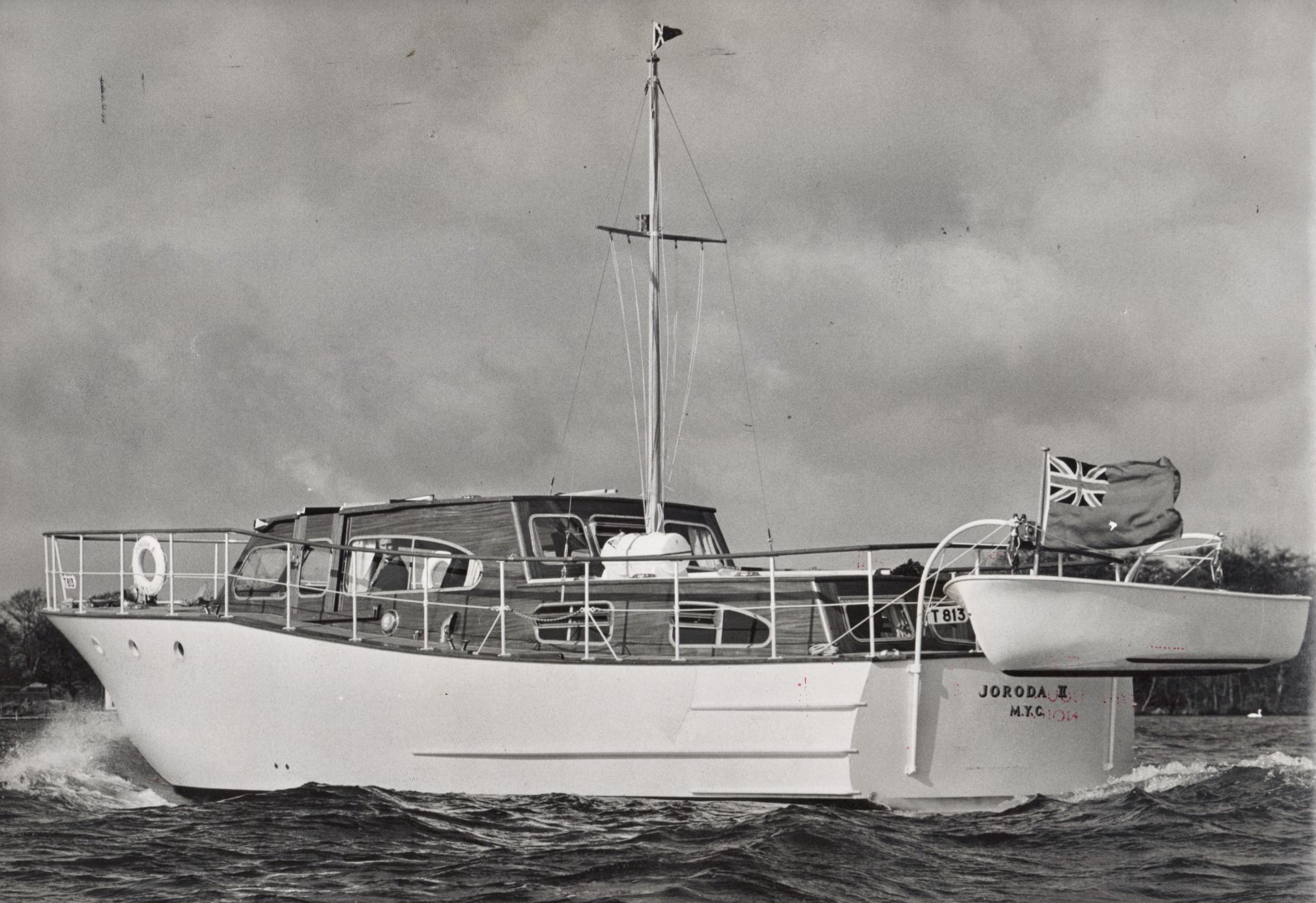
Powles had always built sea going craft. Before the war, the yard built “Ilmio”, a 28 foot, 3 berth cruiser, and after the war, this was brought into the hire fleet and re-named “Sonja”. In the 1960’s, that tradition of building sea going boats continued – in March 1965, work was completed on the £12,000 42 foot 6 inch “Joroda II”, the second in the Searider class, designed by Leslie James. Built of Iroko on oak timbers with teak decks, She had 4 berths and twin Parsons Barracuda diesel engines, developing 170 b.h.p.
As the youngest employee in Powles, John was frustrated by the slow pace of the business, but after pouring his woes out to Leslie James, he was offered the opportunity to work “on the drawing board” with Leslie in Weymouth for a year. Jack consented, and as a result, John picked up valuable skills in drawing and surveying craft and felt able to make a much more valuable contribution to the business.
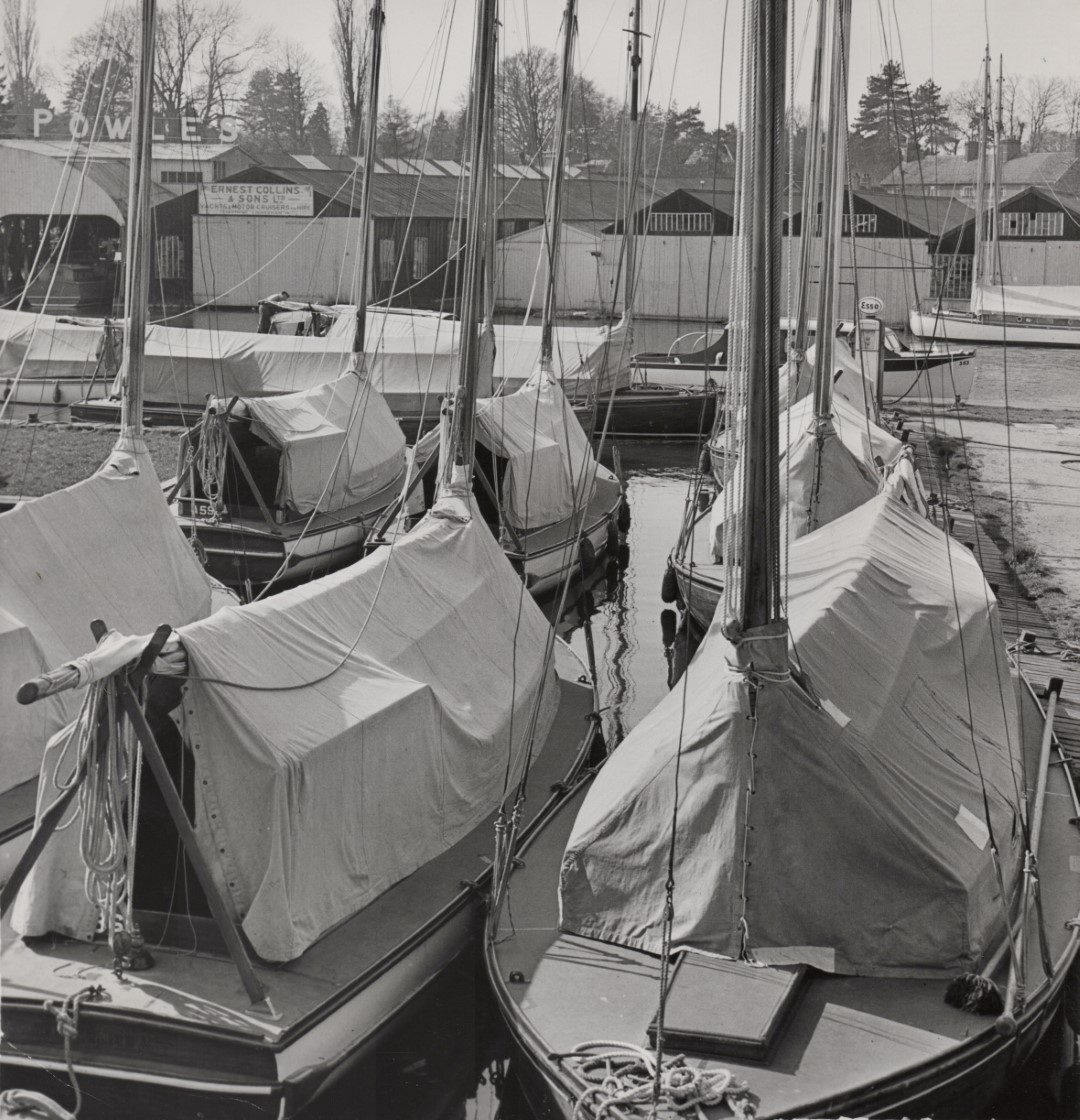
One of the first boats that John had input into in the yard was a new class called “Star Glory” – three of these 29 foot centre cockpit cruisers were built, and described at the time as “the very latest design embodying all the distinctive features for which Powles’ craft are noted”.
A further boat of the “Star Glory” class was built for private use, but sank days after its launch – it had to be frantically pumped out and re-holstered before the owner returned. When the Webasto heater would not work, the owner found it full of water but Young Jack put this down to condensation – the owner never did discover the truth!

The advent of Glass Reinforced Plastic (GRP) in the boat building industry was to have a profound impact on Jack Powles & Co and its future. In the early 1960’s, R.M. Martin, known as “Rip” Martin designed a 35 foot GRP hull. After the work was turned down by Halmatic, it was built by Nottingham firm Bourne Plastics Ltd of Netherfield, Nottinghamshire, a new innovator in moulding GRP for a range of industries, in particular for boatyards and for Lotus sports cars. Twelve hulls were initially built, six for R. Moore and Sons, which became their popular “Baltimore” class and another six for Herbert Woods.
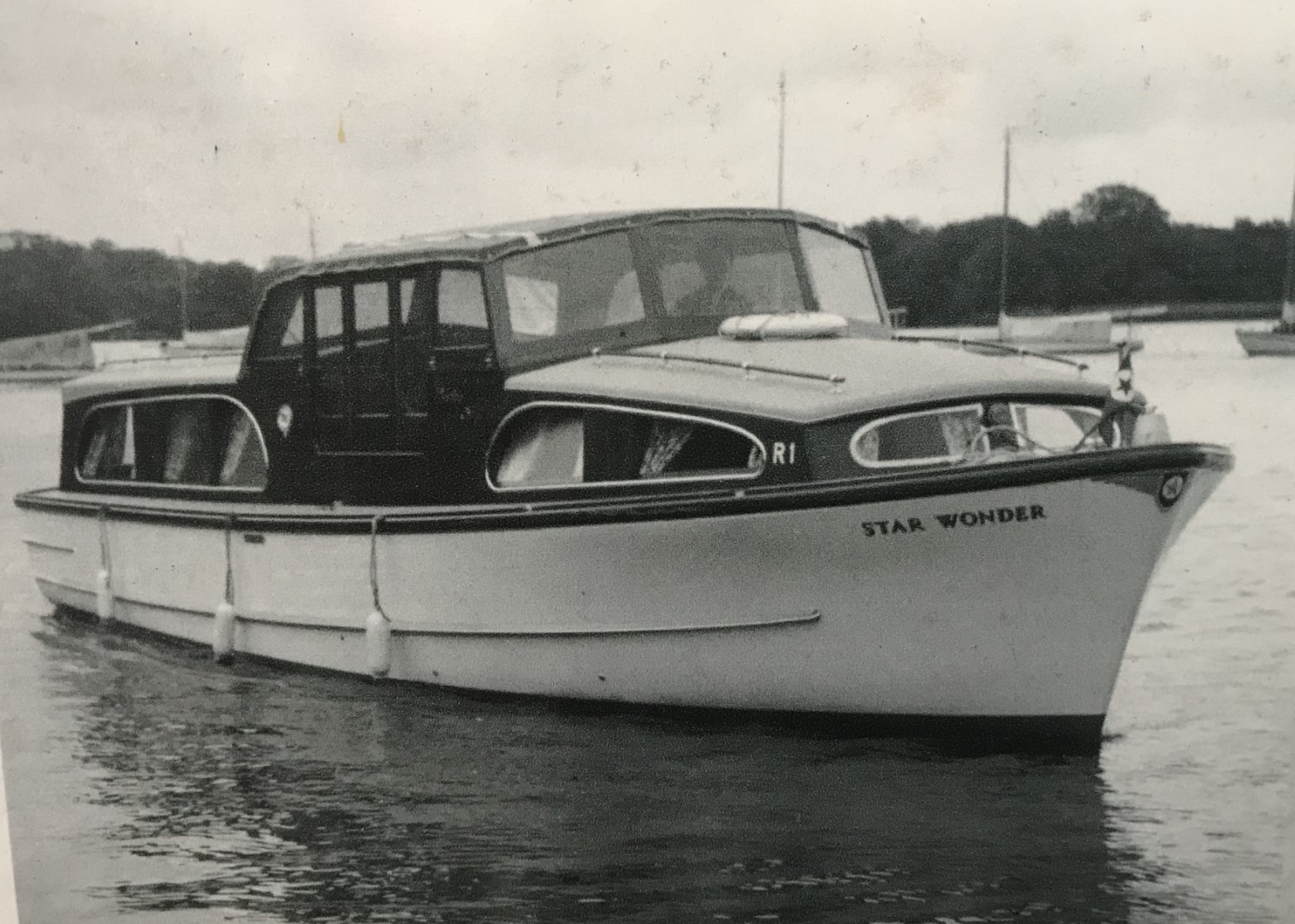
Powles ordered two of these Bourne 35 GRP hulls, to construct the “Star Wonder” class, complete with mahogany superstructure in a classic Powles style.
In 1965, Martin Broom of Broom Boats joined forces with some other Norfolk marine businessmen – designer “Rip” Martins, Norfolk boatyard owner John Linford, Bobby Richardson of Richardson’s Pleasure Craft and Vic Bell of Bells Boats to create a central company, Aquafibre Moulding, which could mould GRP for the myriad of hire boat companies on the Broads. The first and one of their most successful moulds was the Broom 30 (also known as the Ocean 30), but rather than source Aquafibre hulls for their hire fleet, Powles stuck with their existing relationship with Bourne Plastics.
1965 was not only the year of change to GRP, but the year that, through a twist of fate, ownership would change at Jack Powles & Co Limited that would ultimately transform the business. The first element to this was Jack’s grandson, John. The second element was Leslie Trafford, a Norfolk entrepreneur who was responsible for a major part of the construction of the RAF and USAF bases through World War Two, and was the first to recognise the value of ready mix concrete in Europe. His business East Anglian Building Products produced ready mix concrete at its Lenwade works in Norfolk.
Leslie’s daughter, Susan was in a relationship with John Williams, and through this, Leslie became aware of Jack Powles & Co Limited. In 1965, Leslie bought out the shares in the company from Colonel Ronald Burrell, Herbert’s son. After being de-mobbed from the army, Ronald had joined the business but he proved to be fairly hopeless at most tasks – his responsibilities were soon limited to marking up the bookings in Indian ink on a massive wooden board, as they arrived from Blakes.
Under new ownership, in October 1966, John became Managing Director. Jack, then aged 76, remained on the board as a Director.
Jack had been happy to maintain a hire fleet with craft aimed at the 2-4 berth market, and was dubious about the use of GRP. However, John recognised the potential presented by bigger craft, using GRP – they had the same single engine, fridge and single fuel/water tanks; used similar levels of fuel during a hire period; and suffered similar levels of wear and tear, but they had the potential to command a significantly larger hire rental price – something already proved by Herbert Woods with their 42 feet Princess of Light class craft. Having successfully fitted out the Bourne 35, the creation of a 40 foot model, in conjunction with Bourne Plastics and “Rip” Martins, was the next logical step – the “Bourne 40” was born.
Powles agreed to build the plug for this new model – it was built upside down, way, using a new and unusual method of construction, utilising teal, and with no struts. A frame was then built around it, and it was transported to Bourne Plastics in Nottinghamshire to create the GRP mould. Upon its return, this plug then became the last cruiser ever fitted out by Jack Powles for hire entirely in wood, with a mahogany superstructure. “Star Supreme 1”, a 40 foot centre cockpit cruiser, was launched in 1965.
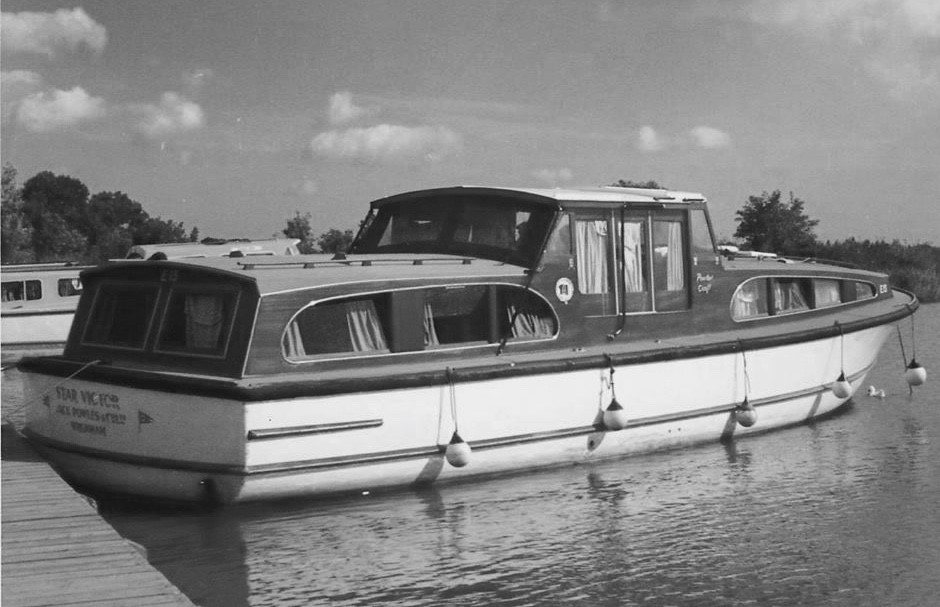
As part of this partnership with Bourne, Powles were able to purchase the first Bourne 40 GRP hull for half price. Having persuaded the Bank Manager to loan an initial £30,000, John then used the Bourne 40 to fit out a further five of the “Star Supreme” class, together with three of the “Star Magna” class in 1967 and four of the “Star Victor” class in 1968. Each retained the distinctive mahogany superstructures that Powles were renowned for.
Having taken on an expanded workforce, John introduced a brand new way of fitting out the first six boats. Instead of constructing each berth, set of drawers etc within one craft at a time, six complete sets were built on the boatyard floor, and then bonded into the craft at a later date.
Powles had a talented workforce at this time, and a couple of them made a name for themselves in other fields. Tich Read was a painter and general handyman who starred for both Norwich and Ipswich Speedway Teams – anyone with a knowledge of speedway will have heard of Tich Read. Some years back, Jack had taken on a young David Dane, who he rated as the best varnish hand he had ever encountered. David used to bring his paintings of Broadland scenes into the yard, and ultimately, he left to start a full time career as an artist. His work is highly respected, and his originals pass hands for tidy sums. Many a holidaymaker (including myself) has brought a print of one of his iconic Broadland scenes.
One other employee of note at the time was a young 16 year old called Vivienne Howard. Over the years, she became a major force and fountain of knowledge within the company – anyone who had a query relating to the business were told “ask Vivienne”!

John Williams was more interested in the construction rather than the hire of boats. After researching the European market, John convinced his fellow Directors to start building luxury seagoing cruisers in GRP for the private market, under the brand of Powles Express Cruisers – Jack Powles International Marine Limited was formed, with John as 50% shareholder and Managing Director.
Their accountant, David Keable, took over the running of the expanding Powles hire fleet, and was highly efficient in this new role. He introduced changes to streamline turn around day, such as placing all the fuel and water tanks on the starboard side. When hirers returned to the boatyard, the yard not only dipped the remaining fuel, ready for the refund, but also filled the water and fuel tanks for the new hirers at the same time.
To keep the cost down, John had the idea of building a mould for a GRP hull that would not only be seagoing, but also suitable for the river. Premier boat designer John Bennett came up with a rough sketch for a 37 foot hull with a seagoing section of the hull that could be shortened in height at the front for river use.

Powles agreed to pay £1500 to John Linford of Aquafibre to construct both the plug and the mould, and then to retain a half ownership of it. When the mould was finished, Powles wanted to get their hands on the new hull, and provisionally planned to launch it at the 1967 London Boat Show. However, Linford intended to give priority to the other Aquafibre shareholders, including Richardsons and Brooms, which would entail a delay of 18 months for Powles. Eventually, they pressurised Linford to produce one hull, and from this, Powles ended the partnership and planned to produce their own plug and mould from it.
Linford supplied the new hulls to Broom as promised, and the Broom 37 Continental was launched for sale in 1968 – over 185 of these were subsequently built by Broom.
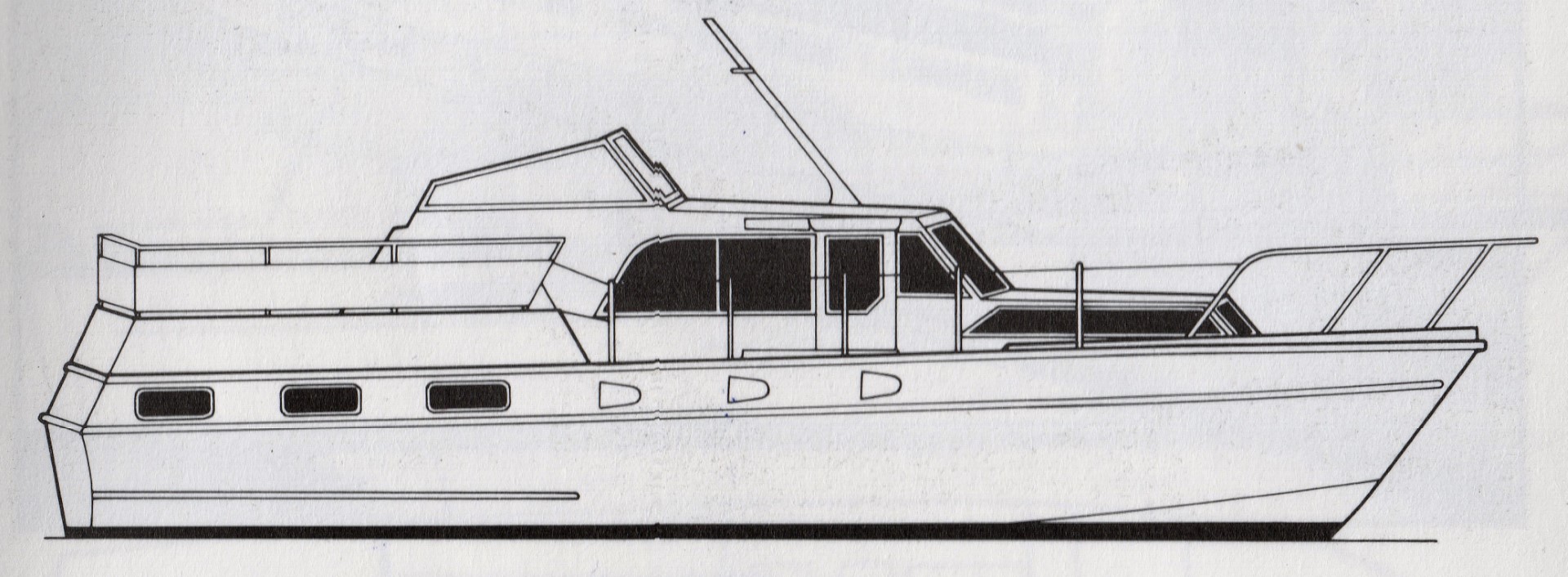
Undeterred, John Williams managed to sell their planned first boat to a wealthy American, Morton Gavan, just from a drawing – John designed the superstructure, which he called Fisherman, and included an optional flying bridge on top, as a separate unit for £1500. From this point, Powles worked hard to produce their own plug, utilising John’s engineering experience. They advertised for fibre glass laminators, offering to help set them up in business and as a result, they picked up two experienced glass fibre engineers from Lotus. Ted Brewster and Derek Leveridge of Trend Aluminium were engaged to manufacture the windows.
Powles launched their first Powles Express Cruiser – the Powles 37 – at the London Boat Show in January 1969. The craft was priced from £11,500 with Perkins Engines that offered up to 22 knots of power at sea.

Many of the early sales were completed with buyers overseas, in locations such as Jamaica and Papua New Guinea, all by correspondence via letter or telex – the Buyers never saw the boat in person before it was delivered!
At the same time as building their first Express sea-going cruisers, Powles utilised the same 37 foot GRP hull to create a brand new and distinctively different design of hire craft, based on the latest American design with open plan layout and white superstructure – eight of the “Super Star” class were built and were first displayed at the 1969 London Boat Show.
The tops were built of wood, with a thin layer of glass, and the sliding roof proved problematical. Notwithstanding, they let incredibly well.