With the outbreak of the Second World War, yachts from many hire fleets were requisitioned and moored on the bigger Broads, as a deterrent to sea planes. Jack sought to save his yachts from a watery grave by relocating them to two barns in nearby Catfield for the duration of the war. Young Jack found himself back at his uncle’s boatyard, but in a different capacity.
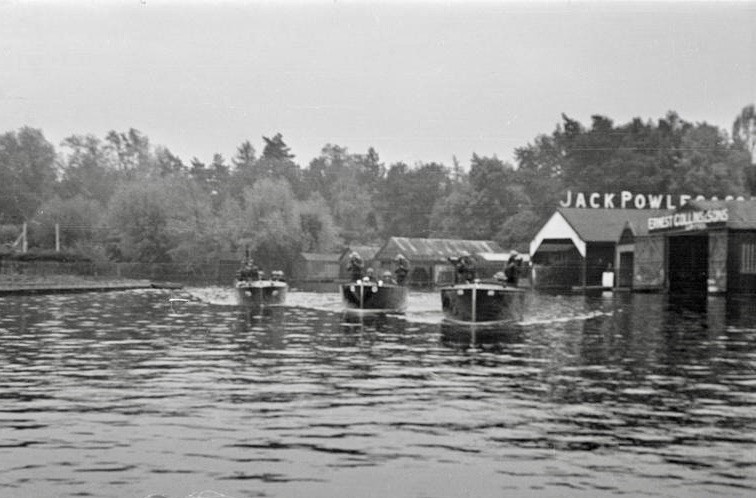
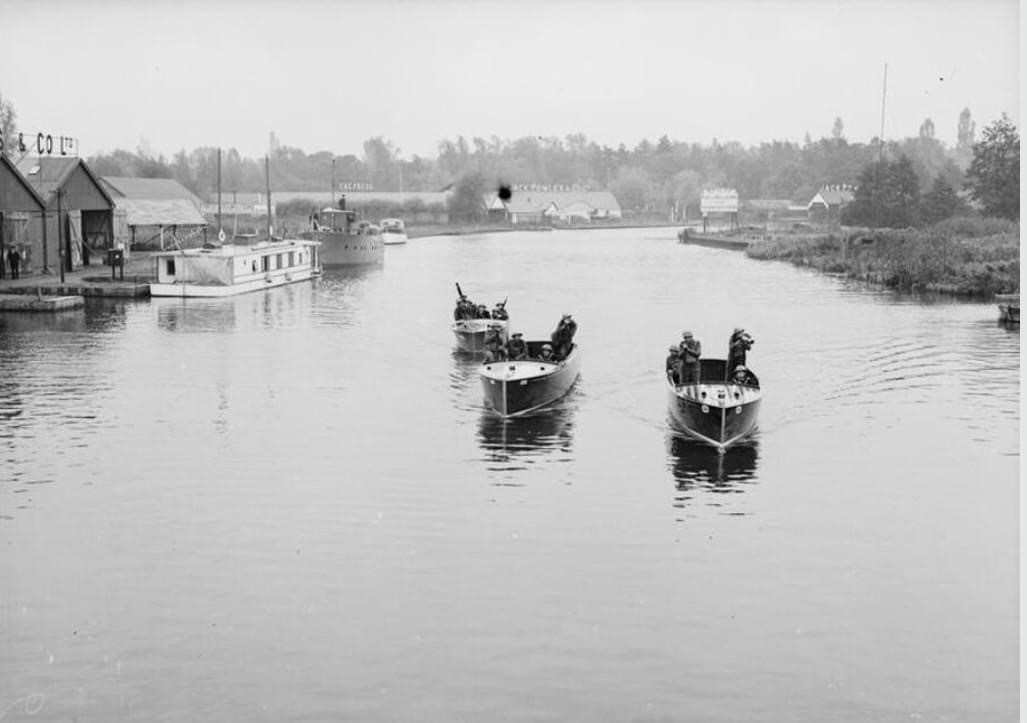
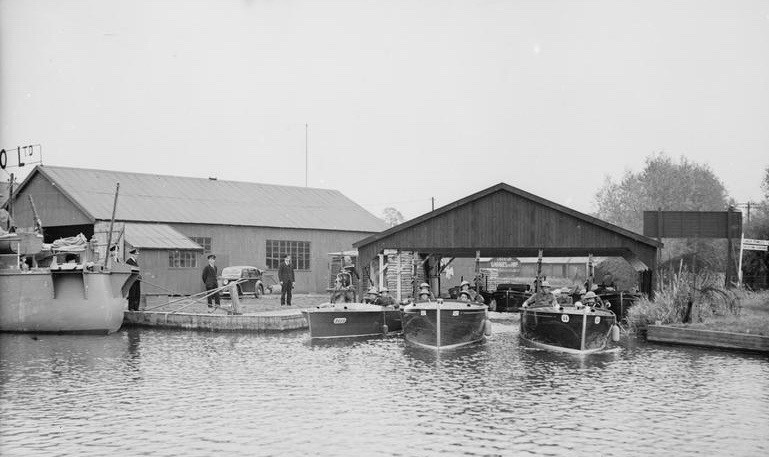
Young Jack volunteered to man the motor launches patrolling the Norfolk Broads, and in April 1940, a large sixty foot twin screw motor cruiser called “Elicia” was towed up the river from Great Yarmouth to become part of HMS Iolanthe, the Headquarters of the Broads Flotilla, which was based at that part of the Jack Powles boatyard on the northern side of Wroxham bridge, next to the granary, with its four span boatshed. The righthand boatshed was requisitioned as an armoury and the floor was concreted and racks put up around the walls to take Great War vintage rifles and about 50 MK1 ground pattern Lewis guns.
Most of the launches used had been originally built by Jack Powles, including the Police launch “A2” – given this; the involvement of Young Jack; and the location of its base, it is perhaps not surprising that it was affectionately known as “Jack’s Navy”.
In other parts of their boatyard, the company was contracted to build boats for the Admiralty, including patrol vessels of up to 60 foot long – many were a model known as the B53, and one such vessel is still in use in Malta today. Many local boatyards were closed down, and a good number of boat builders in reserve occupations who did not join up became part of an expanding work force at Powles. However, this was not an opportunity for the business to prosper – to prevent “profiteering”, profits were limited to the average profits of the preceding three years, and heavily taxed thereafter.
As the war progressed, day boats were able to be hired out again, primarily to the service personnel of the Eighth Air Force, stationed at nearby USAF Rackheath. One pilot called Clay gave Jack’s young grandson, John, a pilot’s jacket which is still a treasured possession today.
Jack and grandson John had a lucky escape in 1944 – one Sunday morning they were due to visit the stored yachts in the barns at Catfield, but John was misbehaving, so the trip was postponed to the afternoon. At that moment, a stray V2 rocket exploded near the barns, causing extensive damage – the yachts emerged relatively unscathed.