The 1970’s formed the highwater mark for Powles in their various activities.
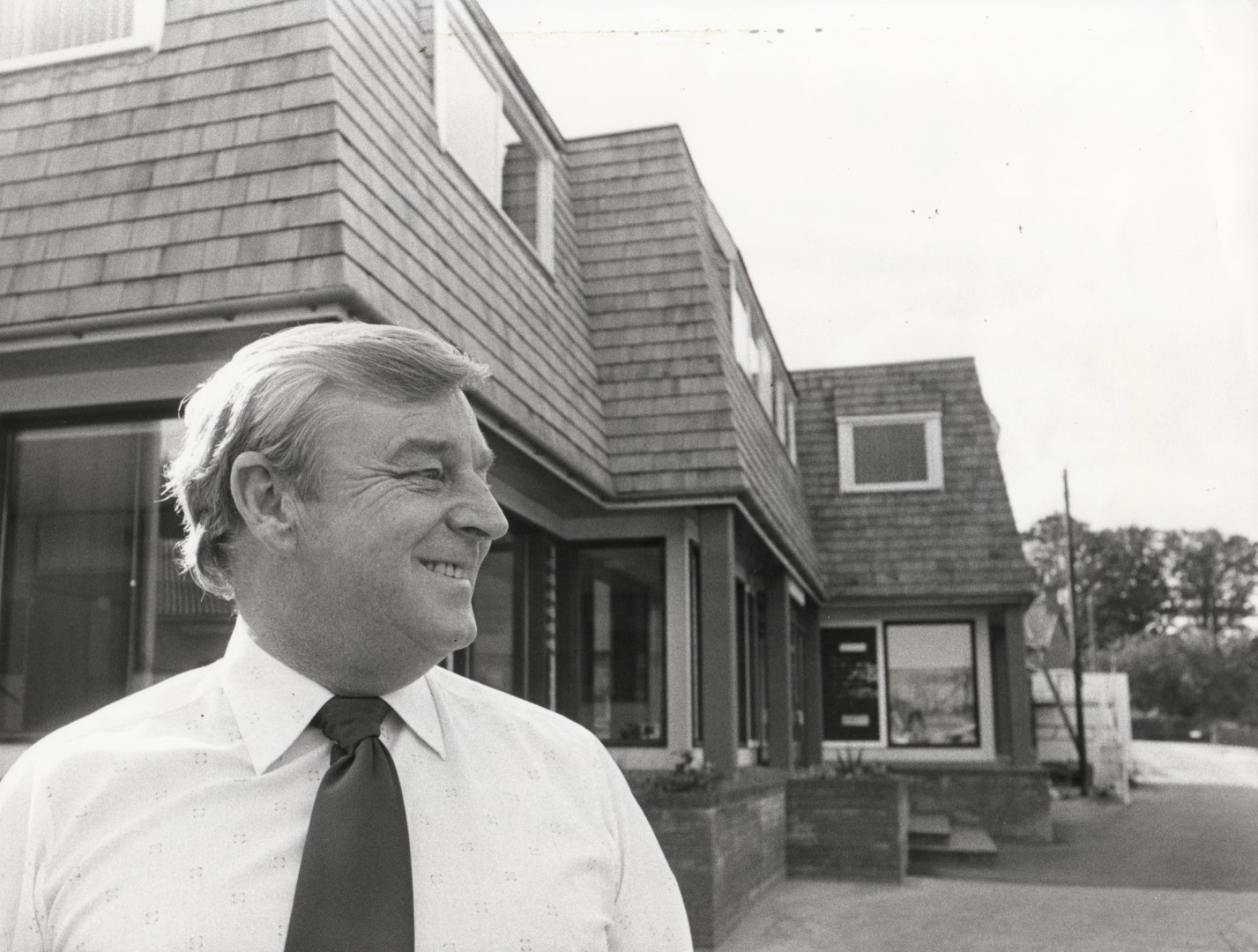
Recognising the opportunities afforded by the expanding holiday industry on the Broads, with up to 3000 hire boats available, and the lack of shore side facilities, Leslie Trafford sought planning permission to demolish the Powles’ 4 span boatshed on their 1.6 acre site next to Wroxham bridge, and to replace it with a shopping centre, with restaurant, café and car park. After refusal and appeal, the Hotel Wroxham and adjoining riverside café and shopping precinct were subsequently erected in the early 1970’s. The hotel was constructed in such a way that a further second floor could be added in the future, but to this day, this has never happened.
Leslie Trafford was an extremely clever man, but he had his little quirks. The new tenant of the hotel, Tony Sangs, was charging three times the level of room rate that Leslie thought he could obtain, and was selling out every night. Leslie was absolutely livid that he had misjudged the rent, and would not speak to Tony or even visit the hotel again.


From this revamped river front, Powles continued to offer their fleet of 20 Seamaster “Starlet” day boats for hire, managed by Don Sergeant, which were both popular and profitable. Many people were introduced to boating on the Broads through these craft. John had spotted this opportunity by spending a day observing the movements of the 28 day boats operated by Loynes, and doing the calculations on rental. Each Seamaster would cost £1000, and John soon worked out that they would recover their investment on an initial fleet of twelve within one year!
This period also saw the last of the remaining sailing yachts disposed of from their hire fleet – it is a testament to Powles craftsmanship that many of these yachts still survive today.

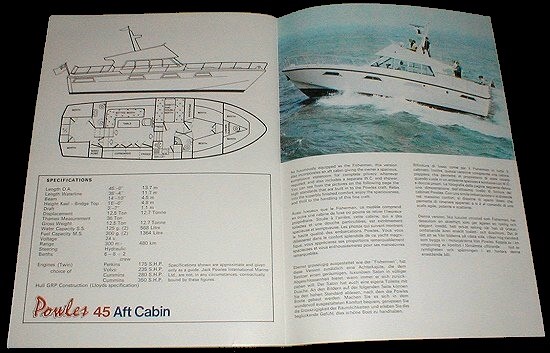
Development of a range of ocean going cruisers continued. In January 1970 Powles took two variations of their Express Cruisers to exhibit at the London Boat Show – the Powles 37 Sports Fisherman and Powles 37 Sports Traveller. However, their ambitions did not stop there – by December, they had built their first 45 foot model, the Powles 45. At £35,000, it was claimed to be the most expensive boat ever built on the Broads at the time, and the largest of its kind to be built in East Anglia. Two variants were to be offered – the Powles 45 Sports Fisherman and the Powles 45 Aft Cabin.
However, the Powles 45 did not have an auspicious start – the buyer of the first Powles 37, Morton Gavan, had agreed to part exchange his boat for the new Powles 45, again just a drawing at this stage. However, during sea trials off Great Yarmouth, the boat failed to achieve the 25 knots promised in the brochure, so he would not take delivery. During construction, Morton had agreed to re-conditioned Cummins engines being installed, at a lesser price, but John had not altered the gear reduction boxes to match – a painful mistake. The boat was eventually resold, with MAN engines installed in place of the Cummins, at the new buyer’s request.
As demand and the model range increased, in January 1971, Powles took over 12,500 square feet in a disused bonded warehouse in Norwich to create one of the largest glass fibre moulding shops in East Anglia. Allan Searle was managing the glass fibre division with 15 staff, whilst Gordon Read, an experienced boat builder from FB Wilds, headed up the fitting out shop at the boatyard in Wroxham, with 60 staff and capacity to fit out 9 craft.
At this time, Powles brought out a radical new design for their hire fleet, based on the latest American model houseboats. John Williams did the design work himself. Utilising a cut down version of their seagoing 45 foot GRP hull, they created the 41 foot “Star Clipper” class for the 1971 season.
Sleeping 8, the large square wheelhouse saloon at the fore had windows all around, and hot air ducted central heating throughout. This particular square houseboat design was absolutely unique to the Broads, and four of this class was built, but the licensing authority at the time pronounced half way through their first season that they were not happy with the 13 feet, 6 inch beam, and immediately introduced a maximum restriction of 12 feet. Powles had to adapt the design, using the 37 foot hull instead, and they subsequently built three of the 39 foot “Star Corsair” class, two of the 36 foot “Star Cutter” class and three of the 39 foot “Star Trident” class, all for the start of the 1972 season.

One further Star Clipper was built for a private owner – it had a single diesel engine which drove a hydraulic drive to two hydraulic motors. This gave the owner two propeller shafts – one propeller going “ahead” and the other going “astern”, if required, for very good maneuverability.. a unique concept at the time.
In January 1972, the Powles stand at the Earls Court Boat Show was one of the largest, with the Powles 37, 45 and for the first time, their latest luxury power cruiser, the Powles 41, on display. Designed by John Bennett, and priced at £24,000 to appeal to a wider market, seven orders were received for the Powles 41 even before it’s boat show debut.
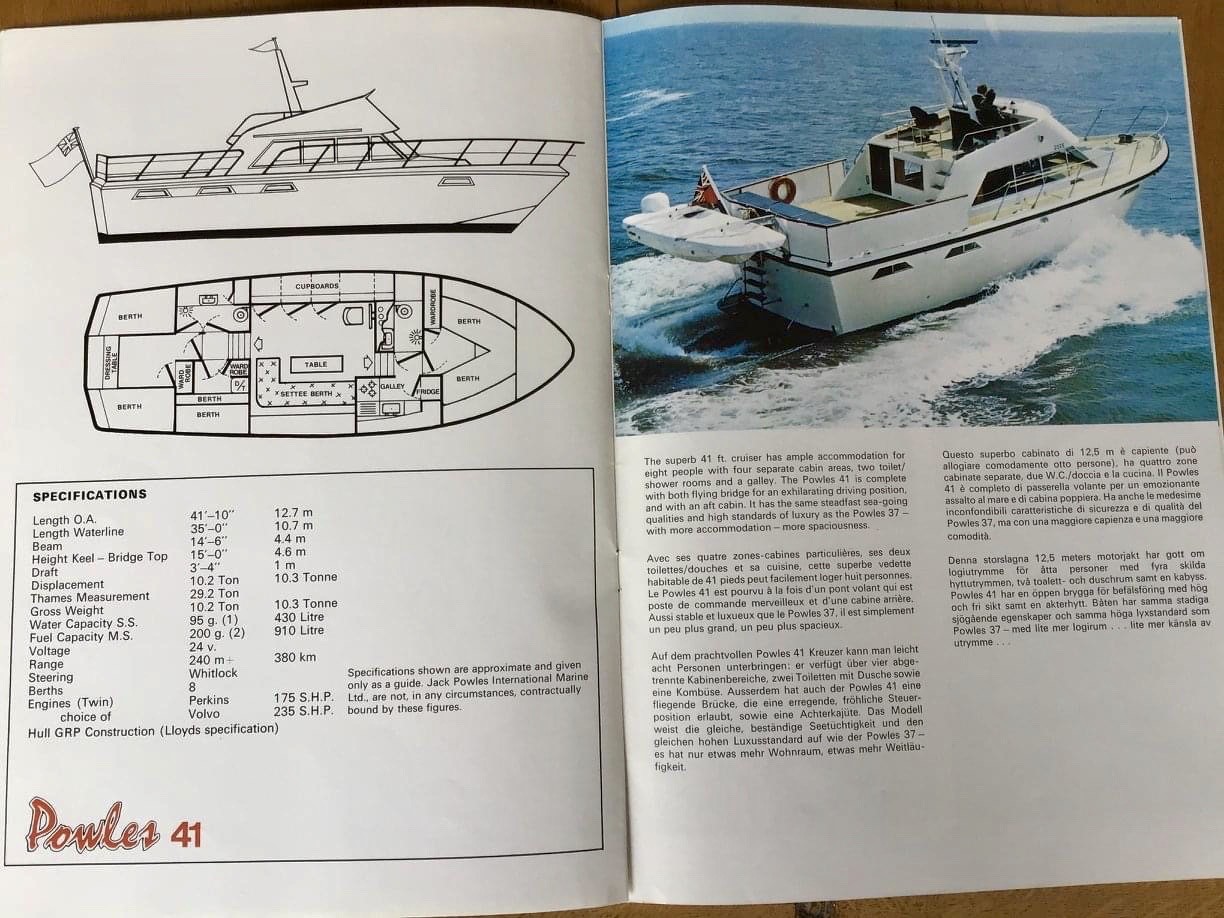
This model also had its own challenges. When the first boat was launched, the transom was right out of the water, due to miscalculations over the centre of buoyancy. After moving the location of the engine and water tanks, the stern still needed a half a ton of lead poured into a special mould, which affected performance. John Bennett forewent all his royalties as a result. Notwithstanding, it proved popular and between 1972 and 1976, forty seven were built, with one more in 1980.
Having lost some confidence in John Bennett after the Powles 41 debacle, Powles now needed a new naval architect. At the Genoa Boat Show, John was out for a meal with a crowd of English people – sitting to his right was a young man with long hair, one Bernard Olesinski. John mentioned that he was looking for a new designer, and Bernard was introduced to him. John was looking to emulate the Italian styles on offer, on a new 38 footer, and Bernard was subsequently set to work.
Bernard also introduced John to a Terence Disdale, to design the interiors. Despite his young age of 24, and the appearance of a hippy, Terence threw out the rule book with his ideas. He offered to produce a fold out book, with choices that customers could make for every aspect of their boat interior – a completely novel concept at the time. It also managed to engage with the other halves of those looking to buy, who were often less enthusiastic about a massive purchase of a “boy’s toy” luxury cruiser than their partner!
Terence went on to design many interiors of super yachts, private planes as well as Hollywood mansions.
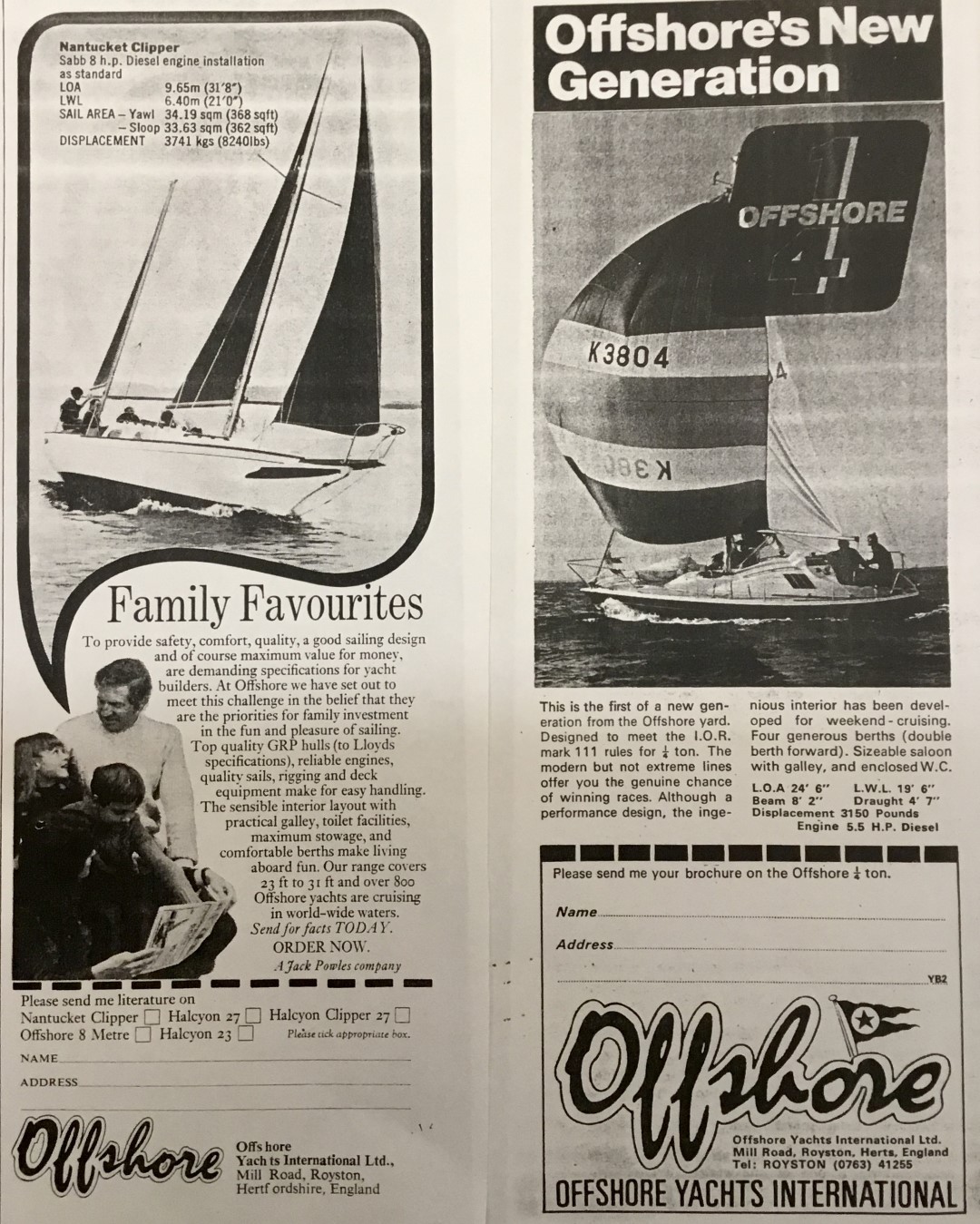
In August 1972, Jack Powles International Marine Ltd acquired the assets of the insolvent Offshore Yachts Limited, which produced a range of sailboats from its Royston base, including the Nantucket Clipper, Halcyon Clipper 27, Offshore Halcyon 27, the Halcyon 23, Offshore 8 metre and the Offshore Trintella 35. The new wholly owned subsidiary of Powles was called Offshore Yachts International Ltd, and the combination of the two was claimed to be probably the largest British boatbuilding organisation at the time. Recognising his contribution to the success of Powles, Gordon Read became a Director of both Jack Powles International and Offshore Yachts, whilst Bill Barnes became General Manager of Offshore.
The Nantucket Clipper was displayed at the London Boatshow in January 1973, alongside the Powles 41.

1973 saw the launch of their brand new power cruiser, the Powles 38. Bernard had delivered the goods with a completely new shallow-V hull, rounded windscreen, slick exterior and interior design. Priced from £24,000, the twin Perkins engines could achieve maximum continuous cruising speed of 28 knots.

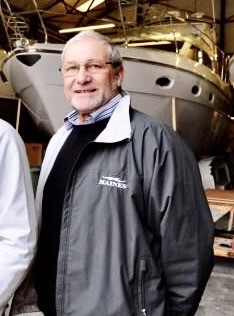
In order to accommodate the fitting out of this popular new addition, and for direct access to the sea, Powles International took on premises in Southgates Road, Great Yarmouth, with Bob Haines as Works Manager, and within four months of setting up, they had sold the factory’s complete production for the Powles 38 for the next 12 months. Bob subsequently set up his own successful luxury boatbuilding business, in Catfield, in 1980, under the name of Haines Marine.
At this point, in December 1973, Powles were poised for massive expansion, as they negotiated with the town council for an ambitious “boat building project as never seen in this country” according to Gordon Read. He anticipated a work force of up to 300, building new Powles craft in a bespoke facility on the riverside land at Cobholm, Great Yarmouth, including a gantry running out over the river for 45 feet. However, this grand vision did not ultimately materialise, not least because it would have taken over two years to construct. As for the Powles 38, forty of these craft ended up being built between 1973 and 1979.
The beginning of 1974 brought an enforced three day working week, as the Government wrestled with striking miners and dwindling fuel supplies. At a bleak and cold Earls Court Boat Show, optimism was thin on the ground, but notwithstanding, Powles launched the new Powles 33, another beautiful design by Bernard Olesinski.

The Powles 33 was intended not just for private owners, but also for hire fleets, including the proposed Powles fleet in Holland. However, after just one season in 1978 on hire with Moore & Co, it was determined that it was not suitable for the Broads, so it was sold into hire fleets on the Thames, the Shannon and the Scottish Highlands. In later years, two craft re-appeared on the Broads with Pacific Cruisers.
The mould had a bolt on transom, so you could produce either a 33 foot or a 36 foot GRP hull. The Powles 33 was fitted with twin GM Bedford 138HP engines, on V drives, fitted right at the rear, under the cockpit. This made it very quiet but also enabled a speed of over 20 knots.
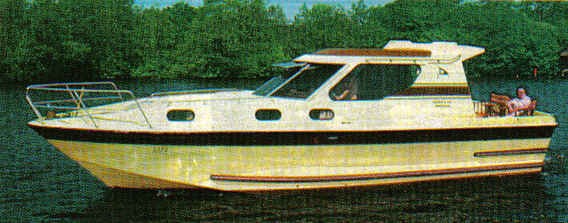
1974 saw the launch of a new centre cockpit cruiser for the Powles hire fleet. Four 37 foot “Star Dust” class were built, with two of these eventually ending up in Holland in 1977, when Powles launched a small hire fleet on their waterways.

In the same year, Leslie Trafford acquired the hire fleet and boat yard premises from R Moore & Sons in Marsh Road Wroxham – Under the Moore & Co brand name, this famous Broadland boatyard would end up fitting out and using many Powles designed hire craft, including Moretime (42 foot, 1975 onward), Seamore (39 foot,1976 onward), Supermore (33 foot, 1978 only), Strathmore (42 foot, 1979 onward), Braemore (37 foot, 1979 onward) and Kerrymore (37 foot, 1982 onward). R Moore & Sons carried on as an independent business, building dinghies.
In January 1975, the 21st London Boat Show coincided with a bleak period in the country’s economy – cruiser sales in the home market had dropped off considerably, but in response, Powles focussed even more on export opportunities – with 64% of the combined Powles and Offshore sales being exported in 1974, this seemed a logical next step.
Bill Barnes, who had been busy at Offshore Yachts International, was promoted to Group Sales Director at Powles. Ernie Godfrey was put in charge of the manufacture of the Offshore range in Royston.

Powles established offshoot companies abroad, offering a comprehensive package including boats, moorings and after-sales facilities. In Holland, Jack Powles Holland BV was set up in Modemblik, a beautiful old town on the Isselmeer, under the management of Ronald Groen. In France, Jack Powles France was set up as a French company and based in Port de Saint Jean Cap Ferrat, beautifully situated between Nice and Monaco – it was well positioned to tap into the luxury market of the French Riviera and the Mediterranean. These efforts in Europe also included exhibiting at boat shows in Stockholm, Zurich, Friedichafen, Hamburg, Amsterdam, Genoa and Dublin.
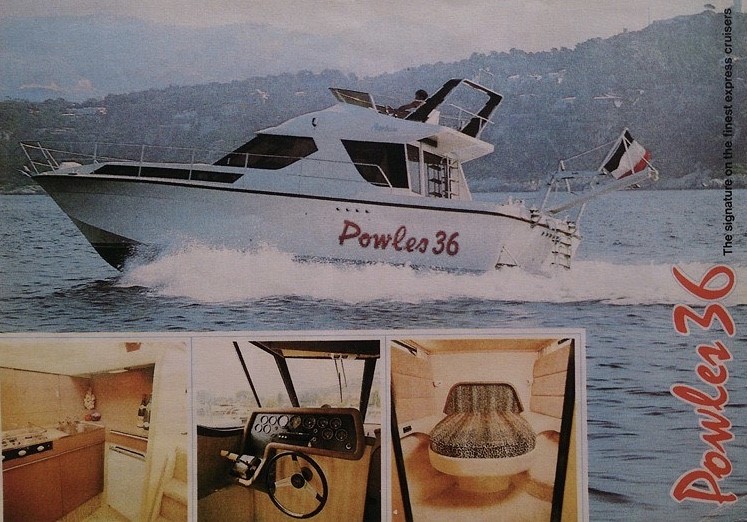
At this 21st London Boat Show in 1975, they exhibited the Powles 33, and launched their latest Olesinki designed luxury fast cruiser, the Powles 36.
The hull shape was deep-V forward and midships, medium-V aft, the twin 210 or 212hp Ford Sabre engines enabled a top speed of 25 knots. The exterior design and style was ahead of its time, and Bernard Olesinki, who made his name through his work with Powles, carried on this tradition with Princess and Fairline in the decades to come, long after Powles had ceased to exist. Terry Disdale continued to look at boats as an extension of the home, with his interior designs. The colour scheme of the fibreglass fittings in the toilet and shower compartments look lurid by today’s standards! Between 1975 and 1978, more than forty five Powles 36 were built.
To expand the Offshore range, Powles successfully launched the Offshore Quarter Ton, re-designed by Bernard Olesinski, with a 210 square foot sail area and Petter 4 HP diesel, as well a de-rated version, Offshore 24, for the more cruising orientated. Sales continued for the Nantucket Clipper, Halcyon 23 and Halcyon 27, and Alan Buchanan, Offshore’s house designer, was working on plans for a larger Nantucket Clipper, to be named the Baltimore Clipper. The plans anticipated a length of 40 foot, displacement of 7.76 tons and sail plans of either ketch rigged or sloop cutter.
Crippling rates of 25% VAT and the recession continued to take their toll on the home order sheet during 1975, but increasing exports and new hire craft enabled Powles to take on extra staff, and to outsource some of the work to other boatyards.
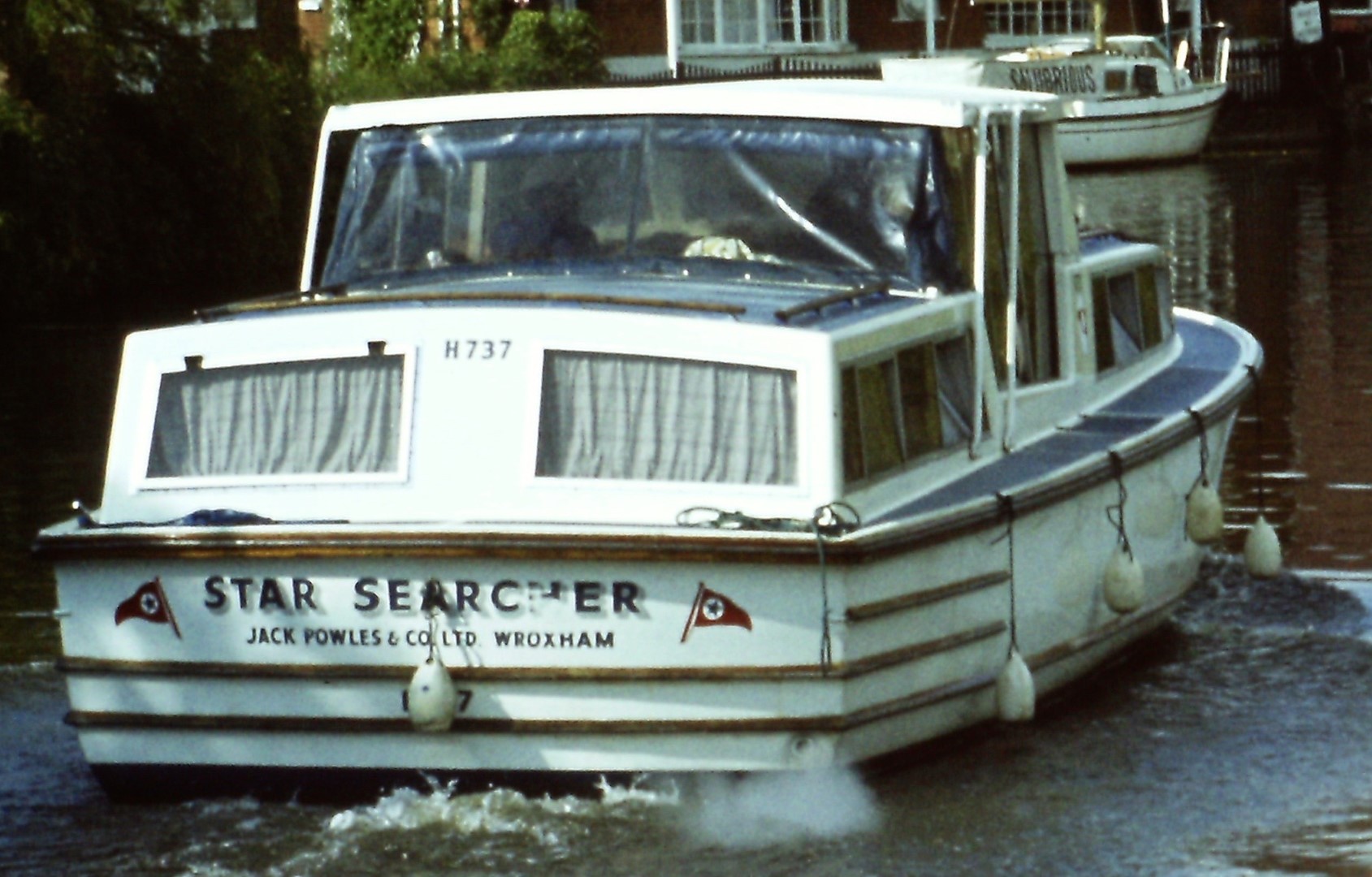
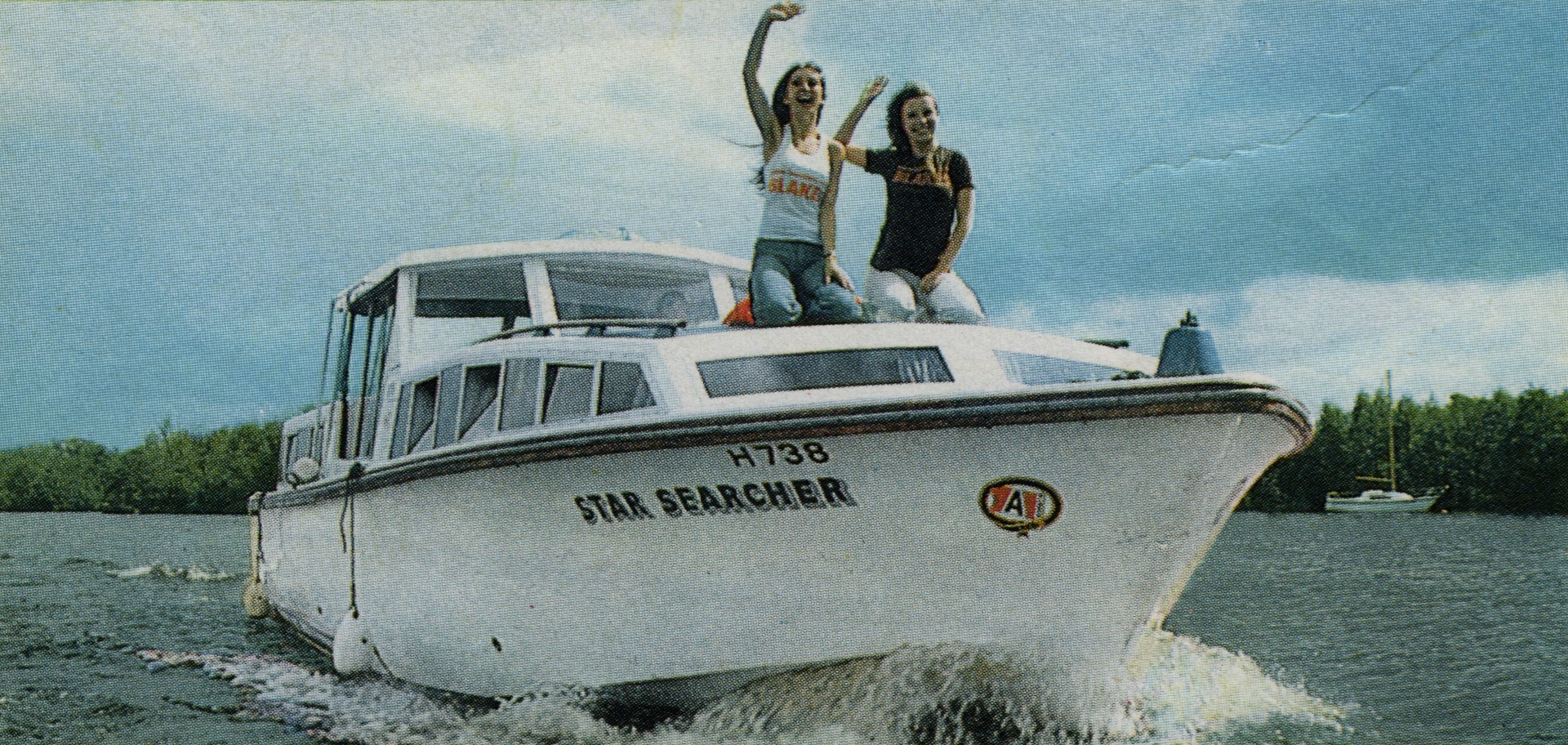
For their hire fleets, GRP hull mouldings from the Powles 45 were cut down to between 37 foot and 42 foot, and GRP superstructures developed to create a fresh range of hire craft. The most successful was the “Searcher” design centre cockpit cruiser. By 1975, twelve of these craft were built – four of the 40 foot “Star Searcher” class, four of the 40 foot “Star Explorer” class and four of the 42 foot “Moretime” class, for the Moore & Co fleet.
At this time, Powles planned a world-wide sales drive to sell at least four boats a year at the top end of the luxury market, and reckoning that more margin would be made with larger models, John Williams commissioned Bernard Olesinski to design a 53 footer, to be known as the Powles 53. A model was taken to the boat shows, which resulted in its first order for the Sultan of Oman, at a cost of £170,000. A second order followed from a Dutch Industrialist, who agreed that they could exhibit it at the 1976 London Boat Show.
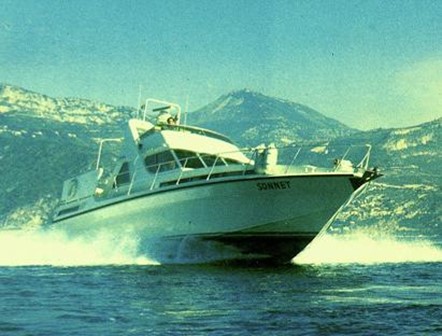
On a roll, a third sale was agreed with the Most Honourable Marques Townsend of Raynham, the founder of Anglia TV. Having been let down by Colin Chapman at JCL Marine, he paid for his Powles 53 upfront, even before construction had started! His craft “Sonnet”, built in 1976, cost £176,000 and was kept in the South of France (St Jean, Ferrat) where it was moored close to Oliver Reed’s notorious party boat.
The first craft was delivered to the Sultan of Oman in the Middle East entirely by sea, via the Suez Canal, with Bill Barnes as Skipper, supported by two Powles employees. For its length, the Powles 53 was much narrower in beam than conventional ratios, the reason being that fuel was so expensive at the time, Powles felt that it could get more speed for the power with a narrower hull.
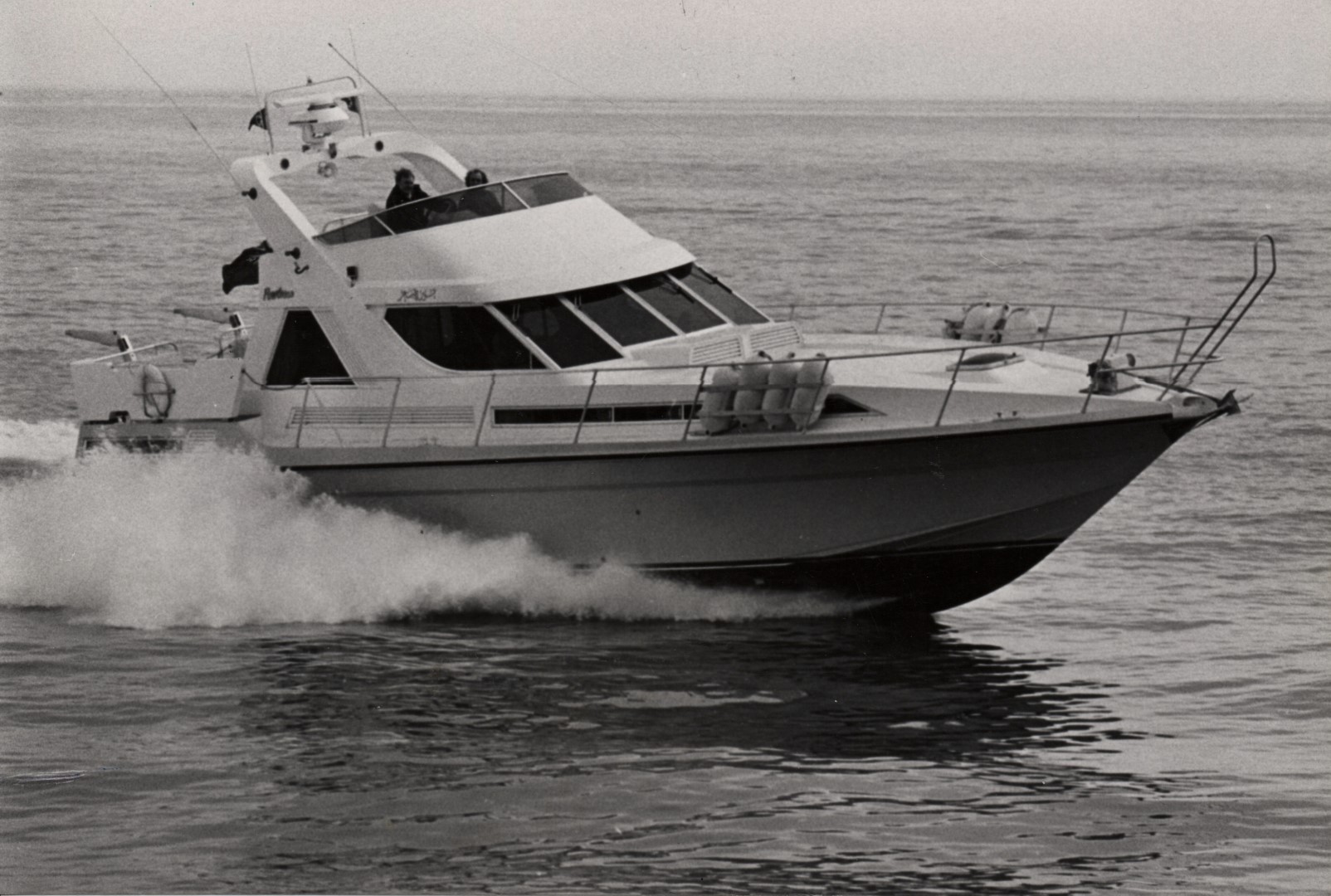
The market leading designs of the Powles 53, along with the 36 and 38 marked the pinnacle of John William’s career at Powles, but in a twist of irony, John was forced to leave Powles two days before the sea trials of the 53 commenced. Having discovered something personally very distressing, John had refused to join the Trafford family holiday in the South of France. Upon his return, Leslie Trafford flew into a rage, and after three hours, they mutually agreed they could no longer work together. John was forced to leave without any farewell to the staff and having lost his business and his family in one day, he was heartbroken.
Trafford’s Accountants valued the business as nothing, due to fact that the cost of the moulds (such as £75,000 for the Powles 53) were still in the books until the last payment on the first contract had come through. Ultimately, Leslie paid John just £5000 “out of pure generosity”, and John was at too low an ebb to muster the energy to fight back.
Ultimately, John Williams was offered an opportunity to build some Polaris 31, with a supporting cheque for £10,000, from Roanald Groen, a Dutch boatbuilder who also ran the small Powles fleet in Holland, and a new company called John Williams Marine Limited, based in Beccles, was created. Under the Westward brand, he built and sold 38 foot aft cockpit craft, which was an Olesinski design, as well as 38 centre cockpit craft, which he designed himself.
Meanwhile, back at Powles, Leslie Trafford brought in a chap from Crane Fruehalf in Dereham as Managing Director, but his experience was in manufacturing refrigerated containers, not boats, and his tenure was short-lived. Gordon Read then became joint Managing Director.
The Powles 53 was the spearhead for the company’s attempt to corner the world’s luxury boat market, and six months planning went into it’s presentation at the 1976 London Boat Show. However, its arrival was not without mishap, as it hit a bridge in London whilst being delivered to Earls Court, and then the Powles stand, already erected, had to be dismantled in a “who does what” dispute between rival unions. However, the Powles 53 outshone the competition at the show, and the largest and most expensive exhibit on display. A subsequent order of a Powles 53 for another Middle Eastern sheik came out at £274,000 – an eye-watering price at the time, and equivalent of over £2 million in today’s prices.
With the home market still crippled by the 25% VAT and the fall in the value of sterling, Europe was the focus of the export drive for their existing range of cruisers – the Powles 33, 36, ,38, 41 and 45. The Powles 36 was also exhibited at the London boat show, alongside two versions of the Nantucket Clipper from Offshore Yachts, in a bit to drive that subsidiary out of the doldrums. Boats were also presented at overseas boat shows, and representation sought through carefully selected agents – the most successful was Mare Nostrum in Beaulieu Sur Mer in France, who sold over 50 of the Powles built craft.
To rationalise on cost, the Royston works of Offshore Yachts was closed in March 1976 and all activity transferred to Wroxham.
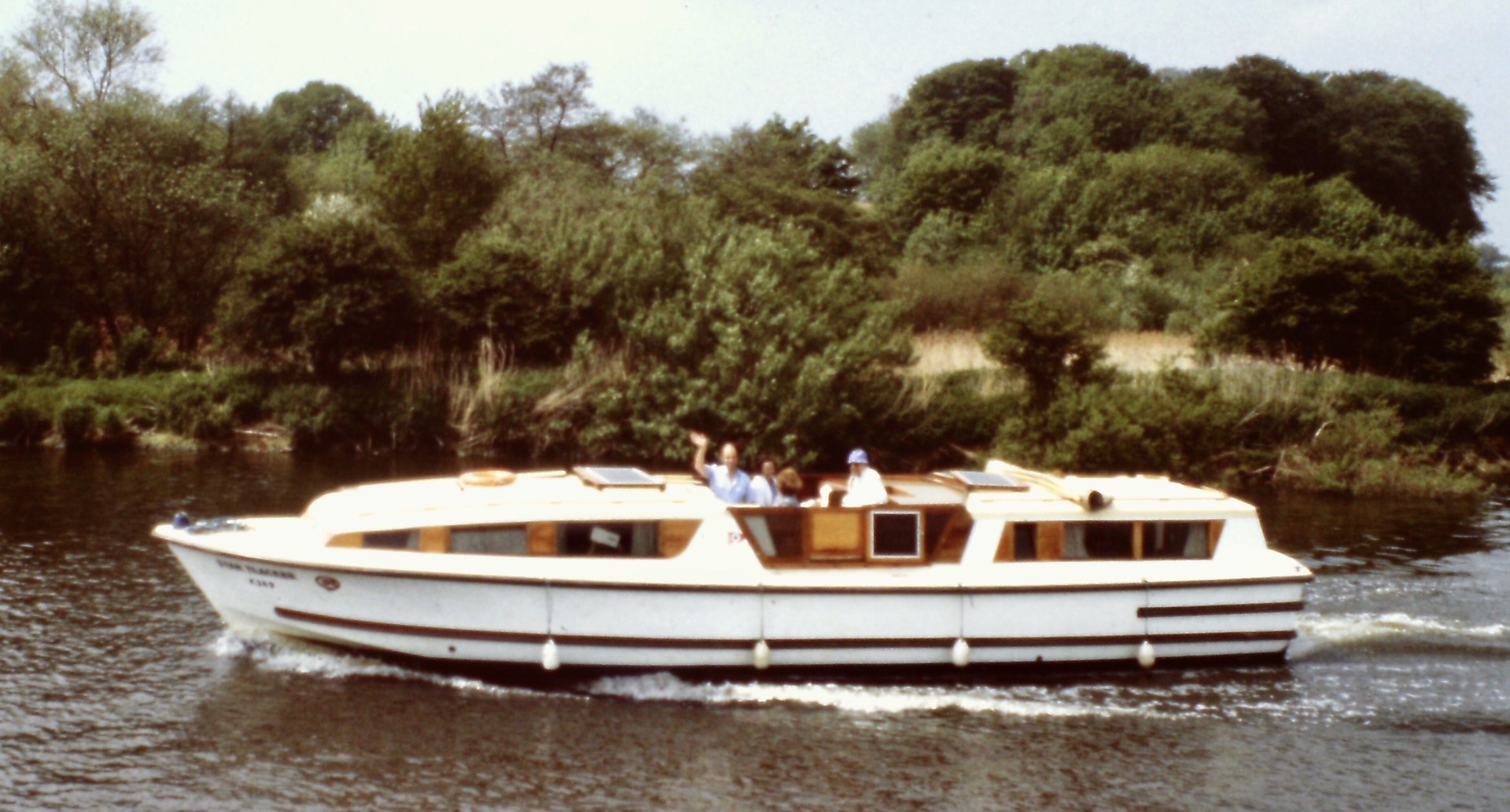
With production committed until June 1977, Powles began to farm out work to other boatyards – one very successful example was the latest edition to the hire fleet, the 42 foot “Star Tracker”, which was undertaken by Norfolk boatbuilder Adrian Bowers from his base at Wayford Bridge. Despite the limitations of space in his small workshop, Bower & Co produced arguably the most visually stunning hire craft ever offered by Powles, with its distinctive brown windows and sleek lines.
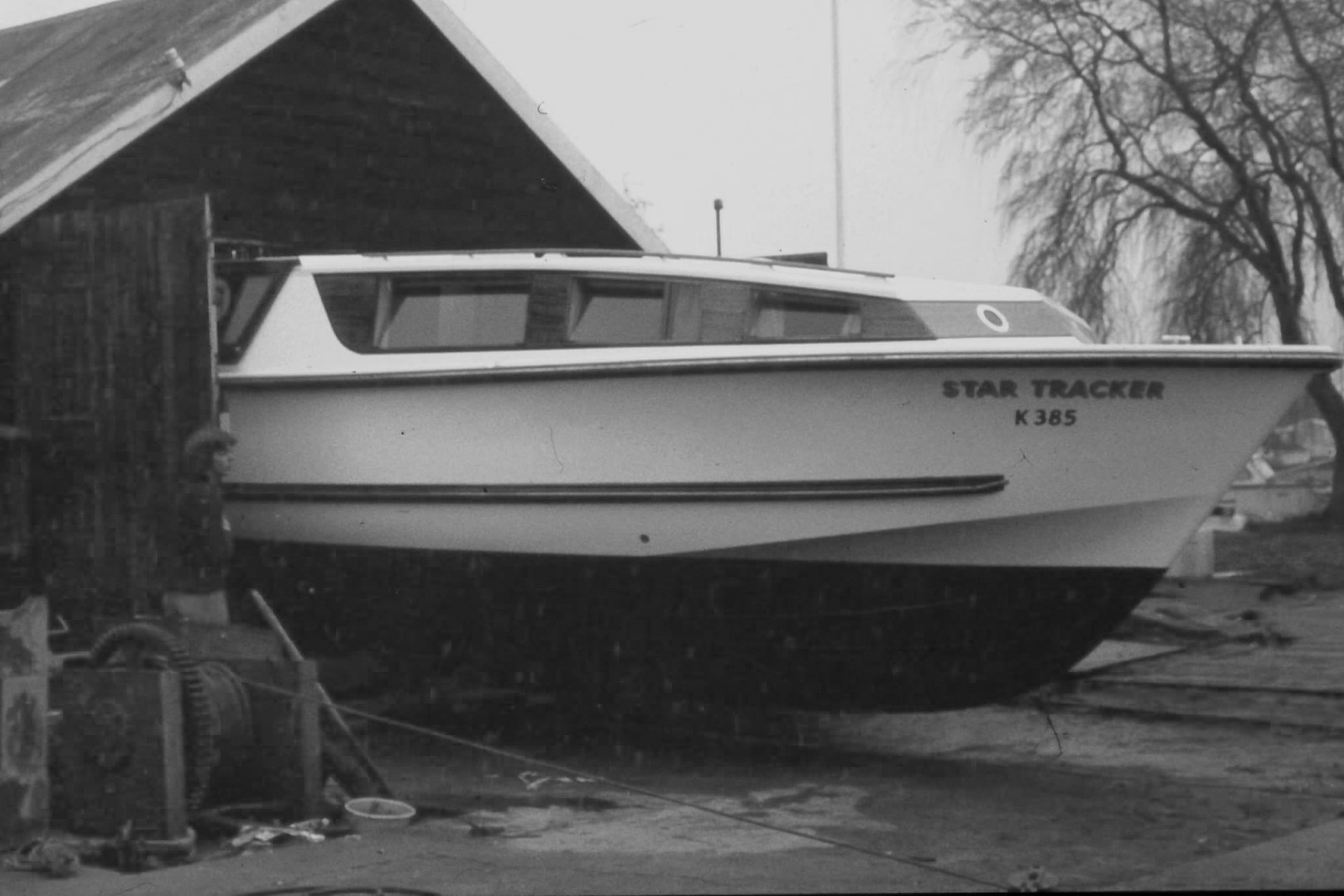
Star Tracker made its debut at the London Boat Show in 1977, and six of this class joined the Powles hire fleet.
In the same year, the 37 foot ocean going mould was used to produce a distinctive new design of hire craft, with a superstructure suitable for the low bridges on the Broads – the “Star Premiere” class. This design was also built for the Moore & Co fleet, as the “Braemore” class.
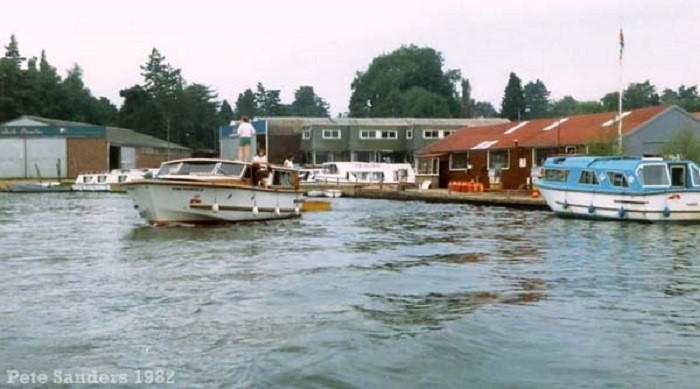
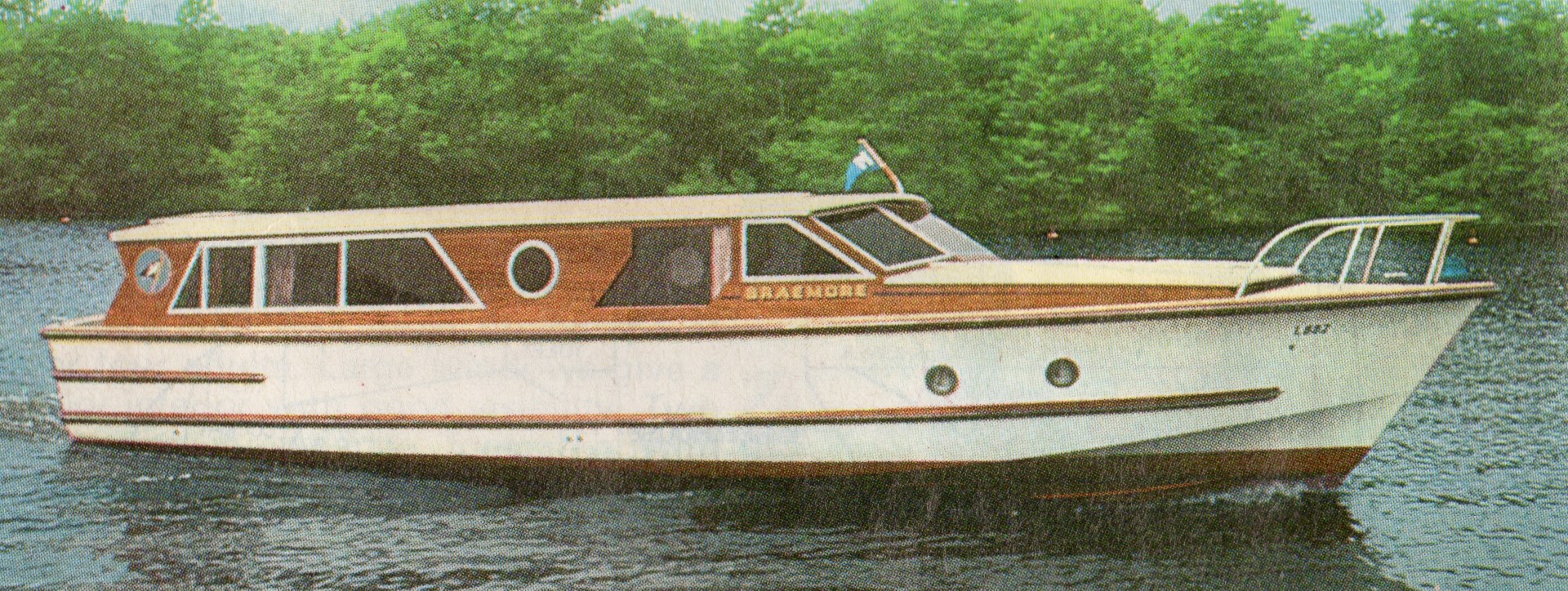
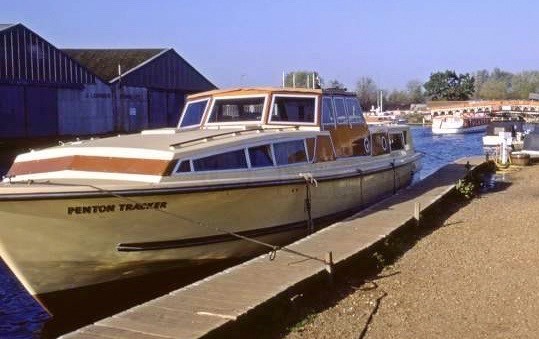
At this time, Powles were busy supplying a whole fleet of hire cruisers, both old and new, for a new venture on the Thames, set up as Penton Hire Cruisers Limited. Every week, Lionel Ponder and Derek Royall were despatched from Wroxham down to the Penton boatyard on the Thames, to manage the turnaround day there. This venture survived until 1984, when some of the newer 42 foot cruisers returned to the Broads, as either replacement Strathmores for the Moores fleet or as Star Enterprises, for the Powles fleet.
In 1977, Bernard Olesinski designed a stretched version of the Powles 36, to be known as the Powles 36+2, and 18 of these craft were subsequently built.
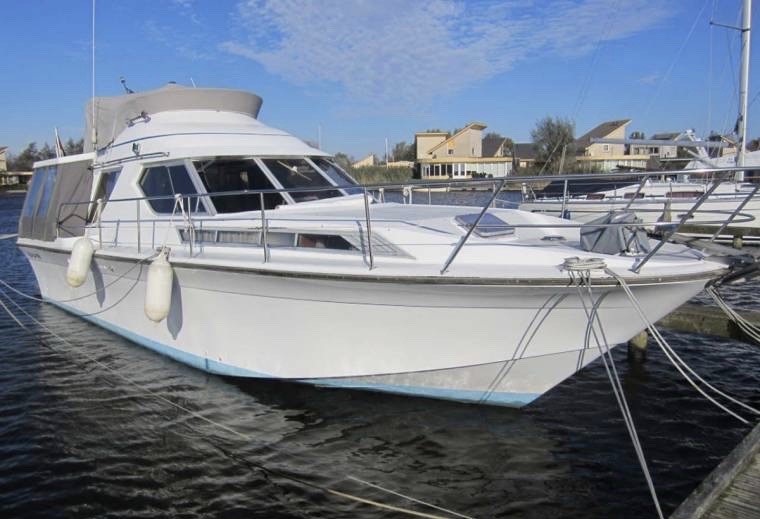
Another new Olesinski design, the Powles 46, was built during 1977. It received its debut at the London Boat Show, in January 1978, and attracted the lion’s share of the attention on Press day, alongside the Powles 36+2. Available with an aft cockpit or aft cabin, between 1978 and 1983, fourteen of the Powles 46 craft were built.
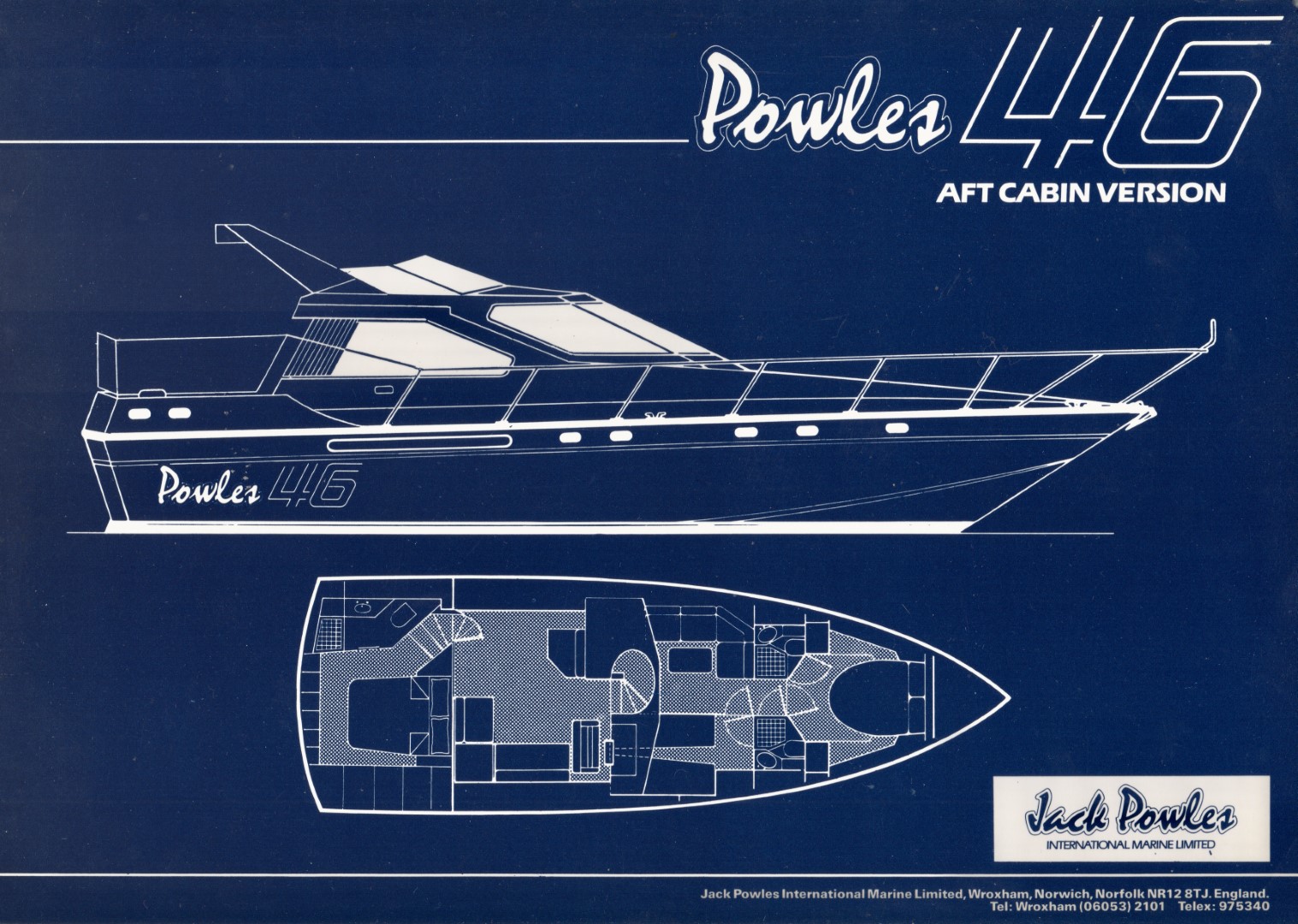
At this time, the order book was still healthy, and designs were in hand to build a Powles 65, with a price tag of over half a million pounds.
Offshore Yachts, having survived many changes over two years, was now happily established in Wroxham, with Ian Russell leading Sales, Purchasing and Production. In the past 18 months, they had sold seventeen Nantucket Clippers, three Halcyon 23, three Halcyon 27, one Offshore Quarter Ton and no Offshore 34’s. These yachts were exhibited at the Oslo, Hamburg, Amsterdam, London, Southampton, Dusseldorf and Annapolis (USA) Boat Shows, and 60% of the turnover was for export, to destinations as diverse as Lebanon, Norway, and the USA. The combined sales output of Powles and Offshore was supported by one of the largest moulding factories in East Anglia, producing anything from a Halcyon 23 right up to a Powles 65.
During 1978, the original Powles 38 was given a revamp, when a stretched version was produced, with a new superstructure – the Powles 40. This craft, with twin Volvo Penta engines, producing a top speed of 22 knots, was a swing back to more conventional boats. At £63,000 ex VAT, the boat was still not cheap, but with her high build standards, competitively priced. The Powles 40 was exhibited at the London Boat Show in January 1979, alongside the 36 and 46. However, despite positive reviews in the boating press in 1979, only six of the Powles 40 were built.
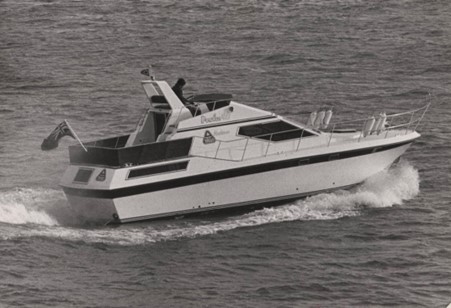
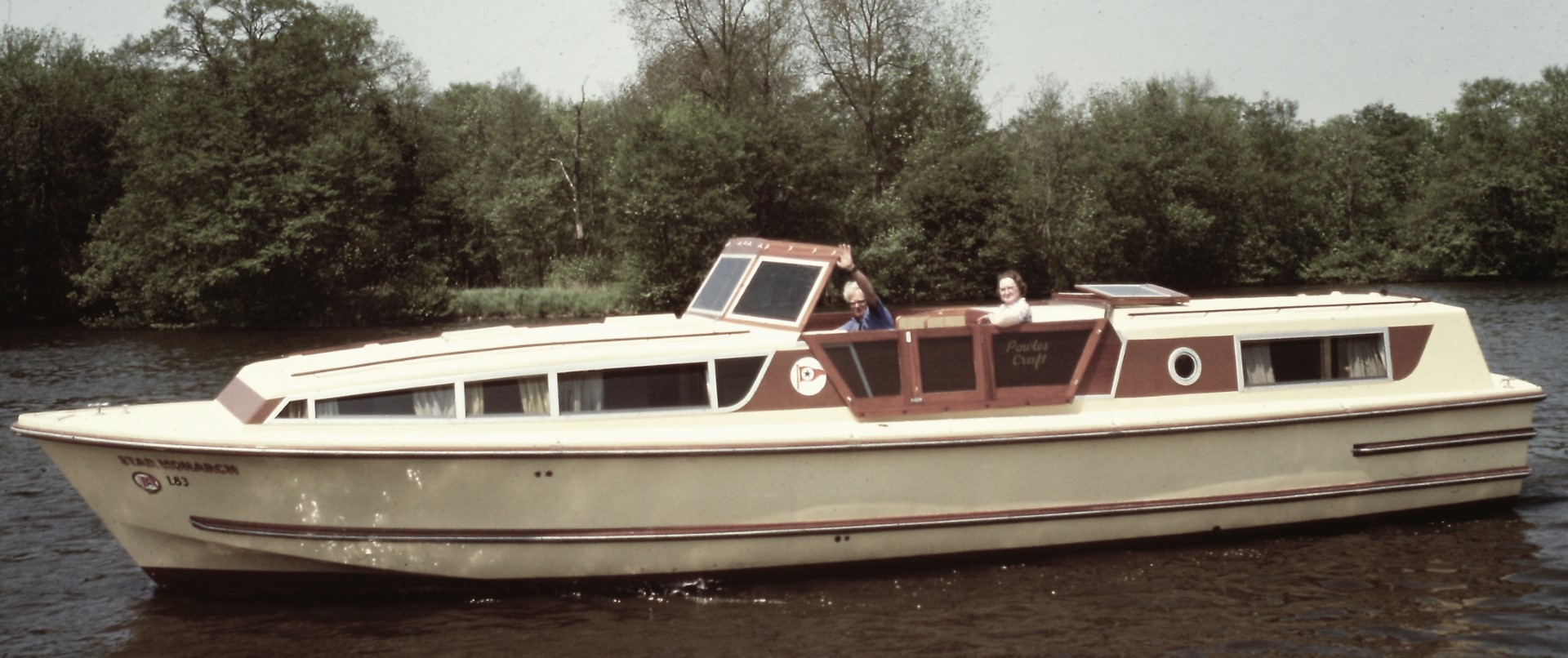
1978 also saw the launch of another 42 foot hire cruiser, the “Star Monarch” class, with the whole of the aft turned into a modern, open plan galley and dining area, with “u” shaped settee, and catalytic gas heater in each cabin. Some were also built for use on the Thames.
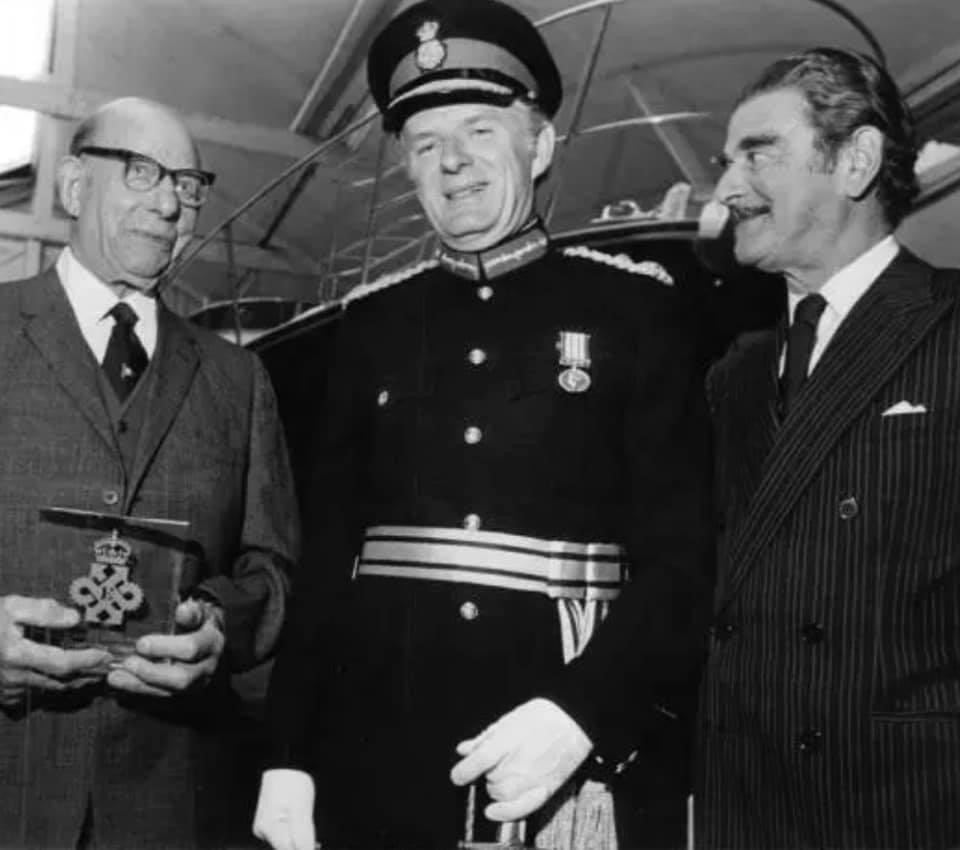
In April 1979, Jack Powles International Marine won the coveted Queen’s Award for Export, in recognition of the fact that the company had taken overseas sales from 30% of production to 85%, on a substantially increased turnover. Powles marked the announcement of the award by releasing the news that export orders for the firm for March amounted to £750,000 worth of boats for six countries – Kuwait, Germany, Sweden, Greece, Denmark and Spain.
In June 1979, the award was presented to Leslie Trafford, as Chairman of Powles, by Lord Lieutenant of Norfolk, Timothy Coleman. As the fastest man afloat under sail at the time, Tim had a special word for Powles:” Any firm concerned with the design and construction of boats that pass through the water at speeds in excess of 35 knots has, I can assure you, my enthusiastic interest and respect. If ever you should be considering, perhaps mindful of the world’s current energy crisis, exploring the merits of a new model capable of achieving the same amount but without recourse to an engine, please let me know as I might come to knock on your door, applying for a job”.
Leslie Trafford put the success of Powles, “a unique and exclusive small company”, to three reasons: “forward looking design, craftsmanship and detailed attention to what customers wanted – we are innovators and not afraid of moulding the traditional skills with new shapes which distinguish us as one of the leading trend setters. We are very proud of the fact that despite our small size, we are making a substantial contribution to the country’s balance of payments”.
This pinnacle of Powles history and achievement was witnessed by Jack Powles himself, then 89, who confessed at the event: “I haven’t much time for glass fibre boats!”
The award event, within one of the boat building sheds in Wroxham, also marked the retirement of Reggie Moye, one of finest joiners and fitters at the yard for over 33 years. Jack credited him for “acquiring a very wide knowledge of the class of timber that is used in Powles craft – that is why the craft in his time carried the hallmark of perfection and first class fitting and joinery”.
At Offshore, Ian Russell left the business in April 1979, and in June, the business became an autonomous company, run quite separately from Jack Powles International, by Ian Bucklitsch. He reorganised production, and planned to progress with the Baltimore Clipper, the 40 foot version of the popular Nantucket Clipper, with a possible launch at the 1980 Southampton Boat Show.
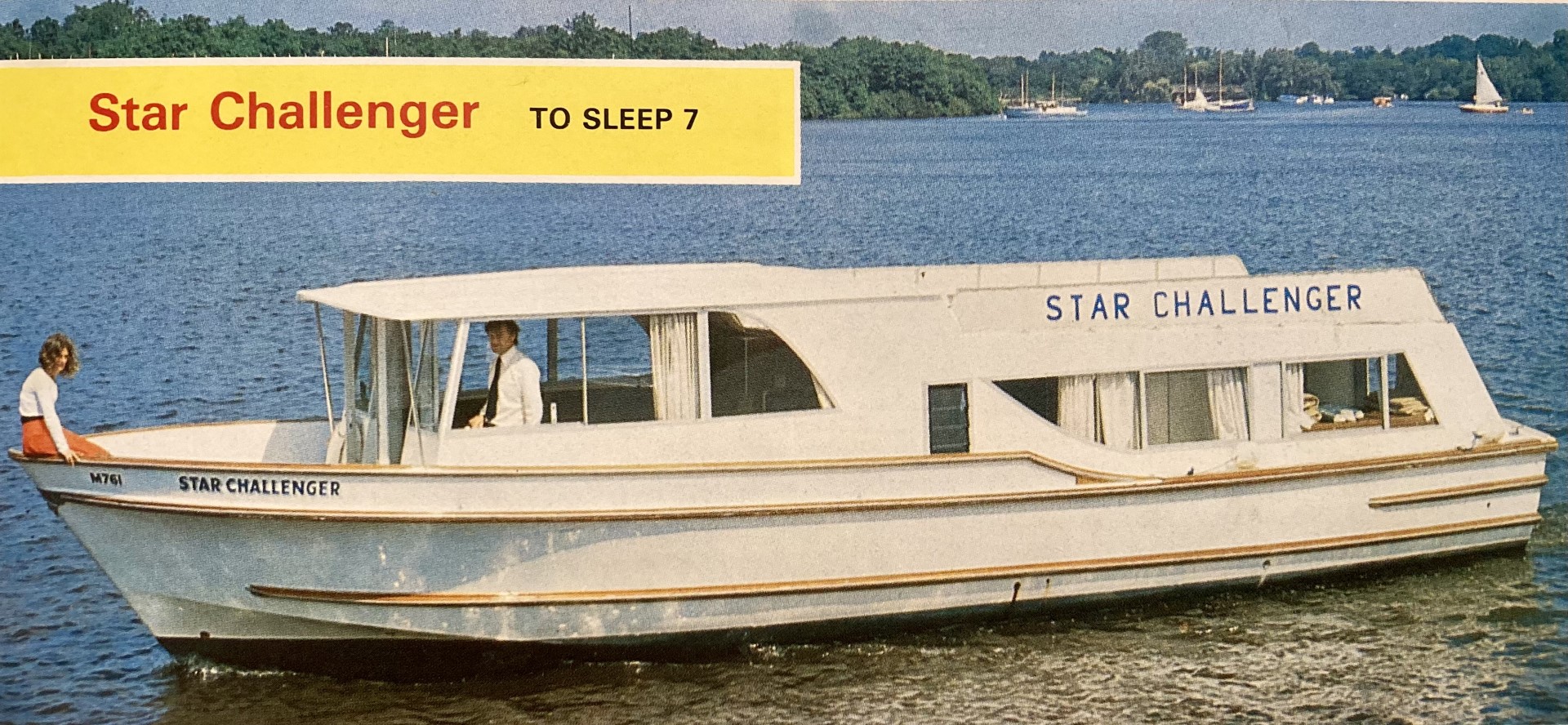
During 1979, a new design of houseboat style cruiser was built for the Powles hire fleet – the “Star Challenger” class . It still utilised the original Powles 45 hull mould, duly adapted to meet the radical new design, and a 41 foot length. It also had rear mounted diesel engines to reduce the noise level throughout.
1979 also saw the development of the Powles Super 38 ocean cruiser, by designer Bernard Olesinski. The Powles Super 38 was based on same hull as the Powles 36+2, and had a very similar layout, but its superstructure was noticeably more streamlined. These craft were usually fitted with twin 220hp Volvo diesels or the 212hp Sabres, with top speeds in the region of 23-26 knots. Twenty nine of this class were subsequently built.
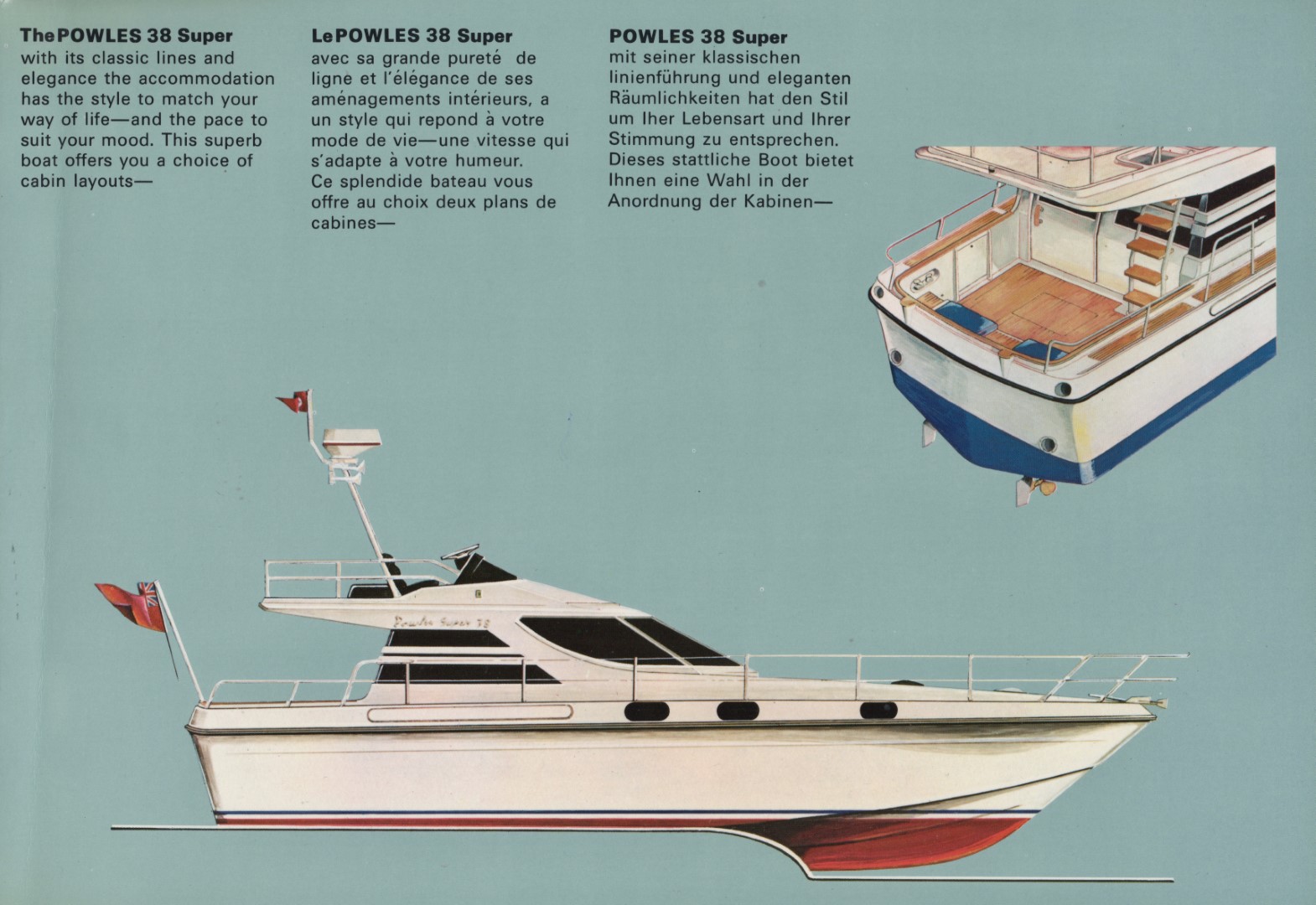
By December 1979, the range of larger cruisers on offer included this Powles Super 38 for £71,000; Powles 46 aft cockpit version for £131,000 or aft cabin version for £141,500; Powles 48 aft cockpit version for £155,000 or aft cabin version for £166,000; Powles 53 for £202,000 and Powles 65 and 75 “available on application”.
At its peak during this decade, Powles employed 121 people through its various businesses. However, the 1979 energy crisis, caused by the Iranian Revolution, saw the start of the severe economic recession that affected much of the world between early 1980 and 1983 – it is widely considered to have been the most severe recession since World War Two. This hit every aspect of Powles’ business.