Over 35 years after its demise, the brand Jack Powles is still associated with luxury, stylish seagoing cruisers, and a distinctive fleet of yachts and river cruisers for hire, all built in their boatyard in Wroxham, Norfolk. Many of these boats are still in use today around the world.
It is often thought that Jack Powles started his boat building business in 1925, but the story starts before then. John George Powles, otherwise known as Jack, was born in the village of Sutton, on the edge of the Norfolk Broads in 1890 and his involvement in boat building in Norfolk started with the famous Collins family in their Wroxham boatyard.

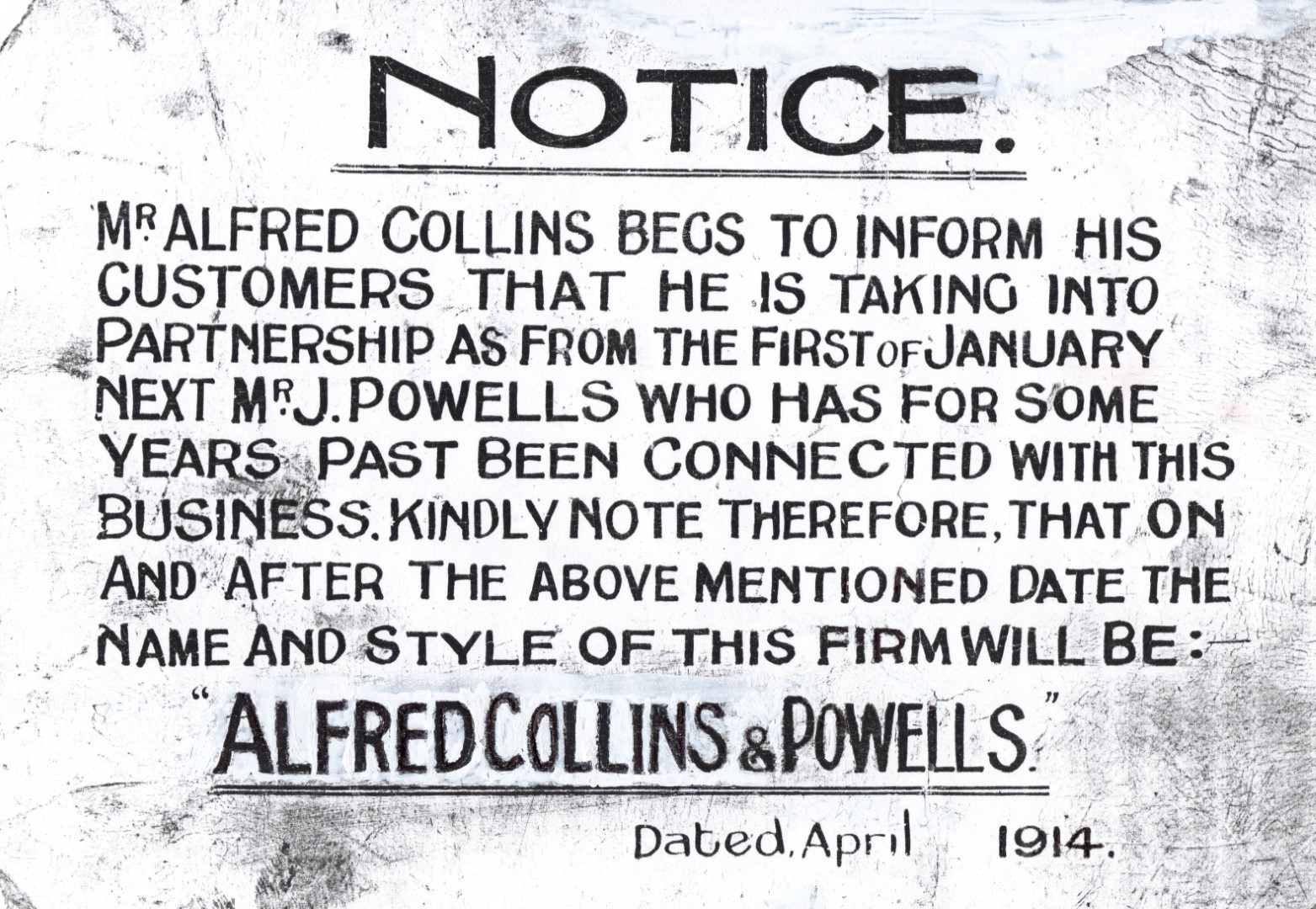
When Alfred and Ernest Collins inherited their father’s business, they found they couldn’t work together, and as a result, Ernest Collins & Sons and Alfred Collins & Co were created as separate businesses, both operating out of Wroxham. John Powles worked as Alfred’s Manager and in April 1914, Alfred announced that from 1st January 1915, he would form a partnership with him as Collins & Powles. However, events in Europe put paid to that plan, as World War One commenced on 28th July. The brand name of Alfred Collins was retained for the next 17 years.
During the war John Powles was based in Dover, Kent and assisted in the maintenance of the seaplanes that were based there. He was an expert Coppersmith and also was very capable using a lathe – years later, these skills were able to be put to good use in Wroxham.
John rose through the ranks of the Royal Navy and became a Chief Petty Officer. During his time in Dover he was awarded The Bronze Medal from The Royal Humane Life-Saving Society for saving the life of one of two men who had fallen into dock. He dived in and saved one but could not find the second man.
His nickname “Jack” was given to him after his service in the Royal Navy in the war. Whilst he was always known as John to his friends, the name Jack Powles stuck for the rest of his career.
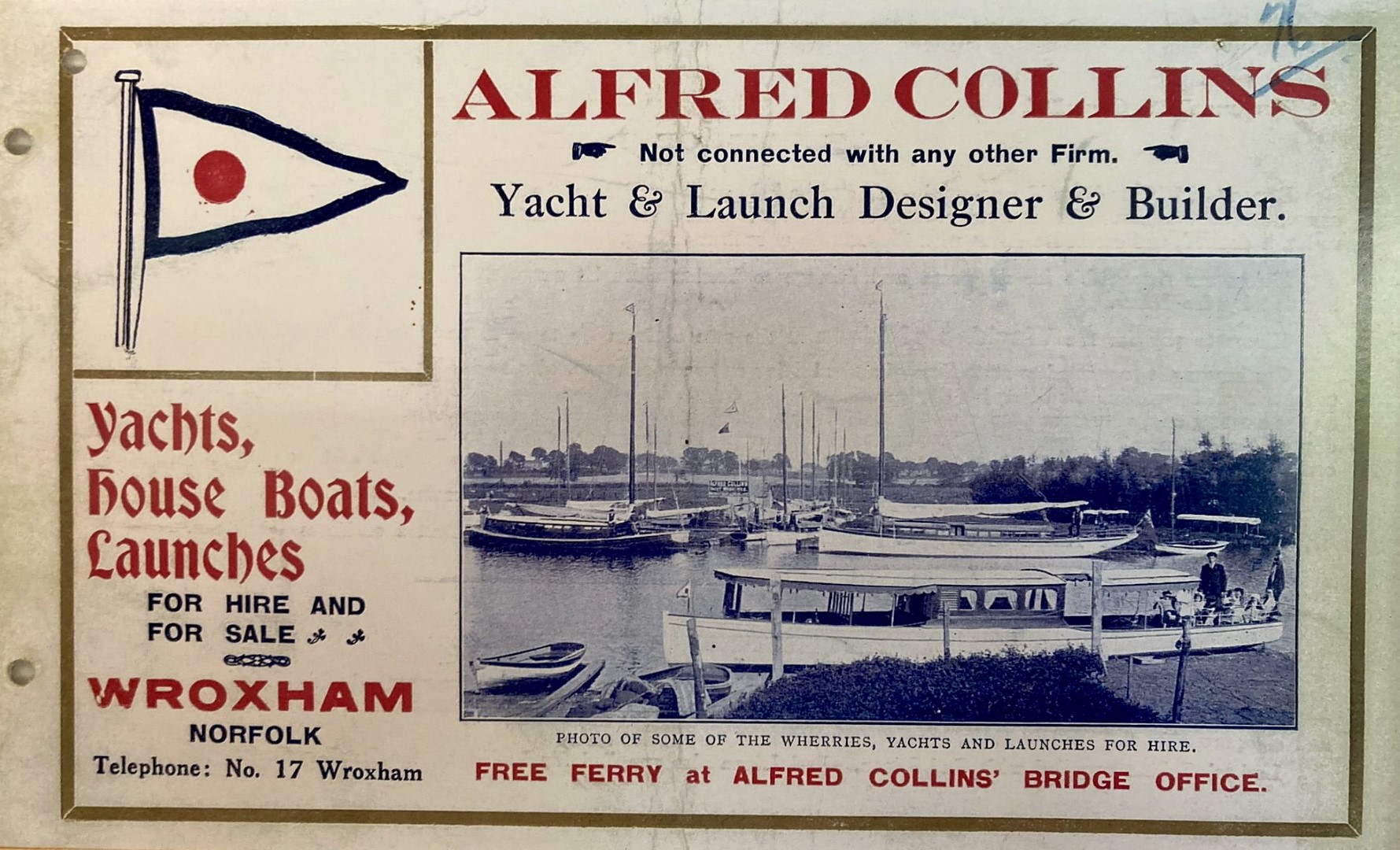
When the war ended in 1918, it was time for Alfred and Jack to focus on on building and hiring boats again. By 1924, they had built up a sizeable fleet of over thirty three yachts, ranging from the luxury wherry yacht “Goldfinch”, complete with two attendants, petrol engine and piano, to the 14 foot “Butterfly”, for two people – towels not included.
They also offered two houseboats and ran the launch “Broadland Belle”. This was originally built in 1913 by Alfred Collins for William Littleboy’s “Conducted tours of the Norfolk Broads”, and was capable of carrying 35 day passengers. In the years to come, Jack Powles would build more passenger craft, for up to 100 people each, for what became known as Broads Tours.
Jack was an accomplished boat designer as well as a boat builder – one such example was a 28 foot yacht “Mancuna”, designed by him and built in 1924 by two men and an apprentice within 14 weeks. The boat was named after the Mancunian businessman who commissioned her and is still in use today. In 1981, aged 92, Jack had an emotional reunion with a fully restored “Mancuna” in Wroxham, which was featured in the Eastern Daily Press.
On 21st February 1925 Herbert Burrell, an Engineer from Nunthorpe, Thetford acquired a 51% share of the business, with £12,000 capital, and created Alfred Collins and Company Limited. Herbert was one of three sons of Charles Burrell, who ran Charles Burrell and Sons of St. Nicholas Works, Thetford – they were renowned producers of Traction Engines, Rollers and Showman’s Engines, of which 329 are known to be preserved.
Herbert was the majority shareholder and Chairman, and was joined by Percy Hemingway, a retiree from the Indian Civil Service who initially acted as Managing Director and Jack, as Boatyard Manager and Company Secretary. Herbert handled the bookings, and Jack subsequently became Managing Director.
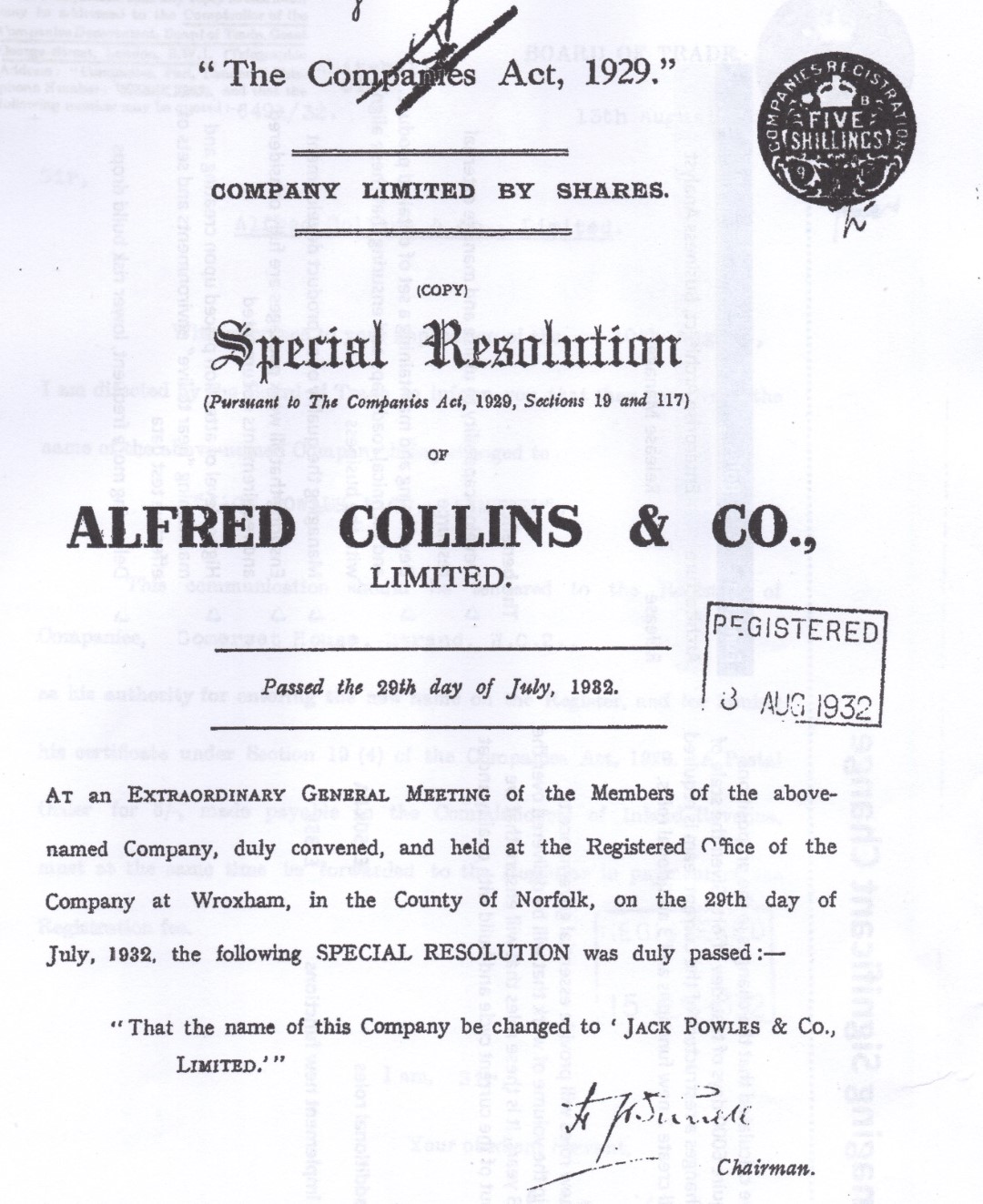
On 15th August 1932, the name of the company was formally changed to Jack Powles & Co Limited.

Jack himself was a great orator and a brilliant raconteur. In John May’s book about the Norfolk Broads, he was described as “the man with the golden voice”. Away from the boatyard, his main interest was shooting – he was a good shot and was a member of shoots at Blickling Hall, Heydon Hall and Felbrigg Hall. His other interest was as a Mason, where he achieved the high rank of Director of Ceremonies.
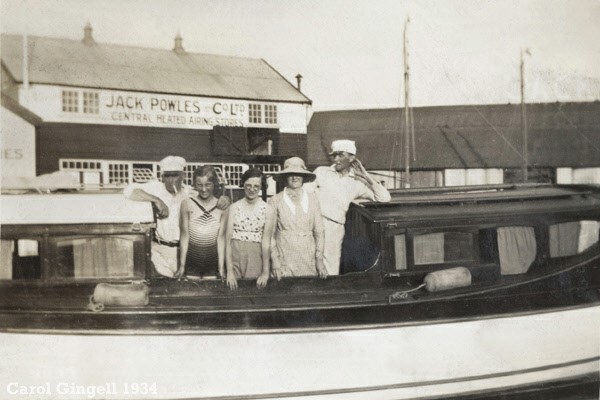
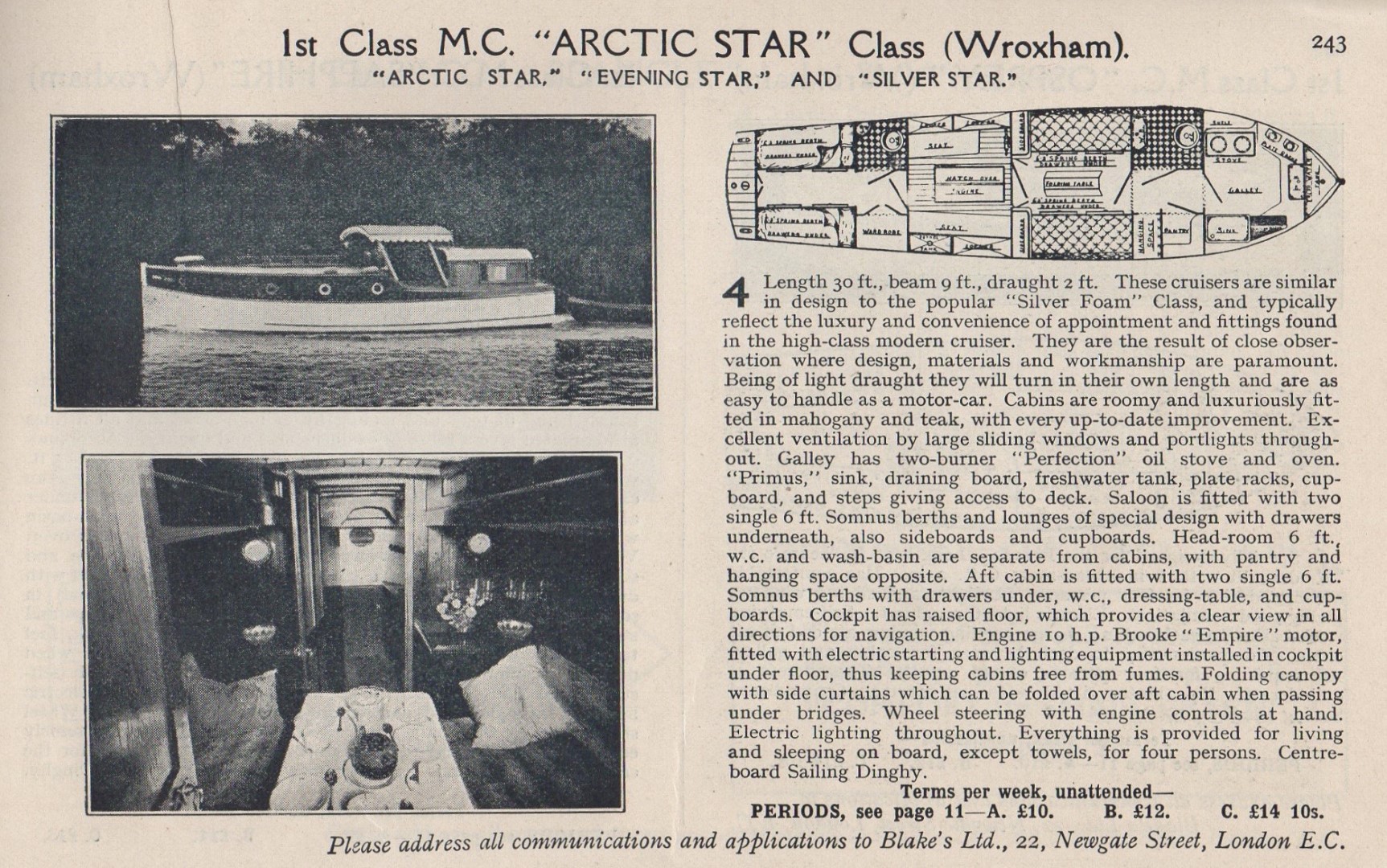
In 1934, Jack’s nephew, another Jack Powles, who was known as “Young Jack” joined the business at the age of 14. Some of the early boats he worked on included the 30 foot “Artic Star” and 32 foot “Noble Star” class – luxury centre cockpit cruisers, built in mahogany, complete with retractable deckhouse, electric shaver point and 100 gallon water tanks “which avoids the risk of using river water by mistake”.
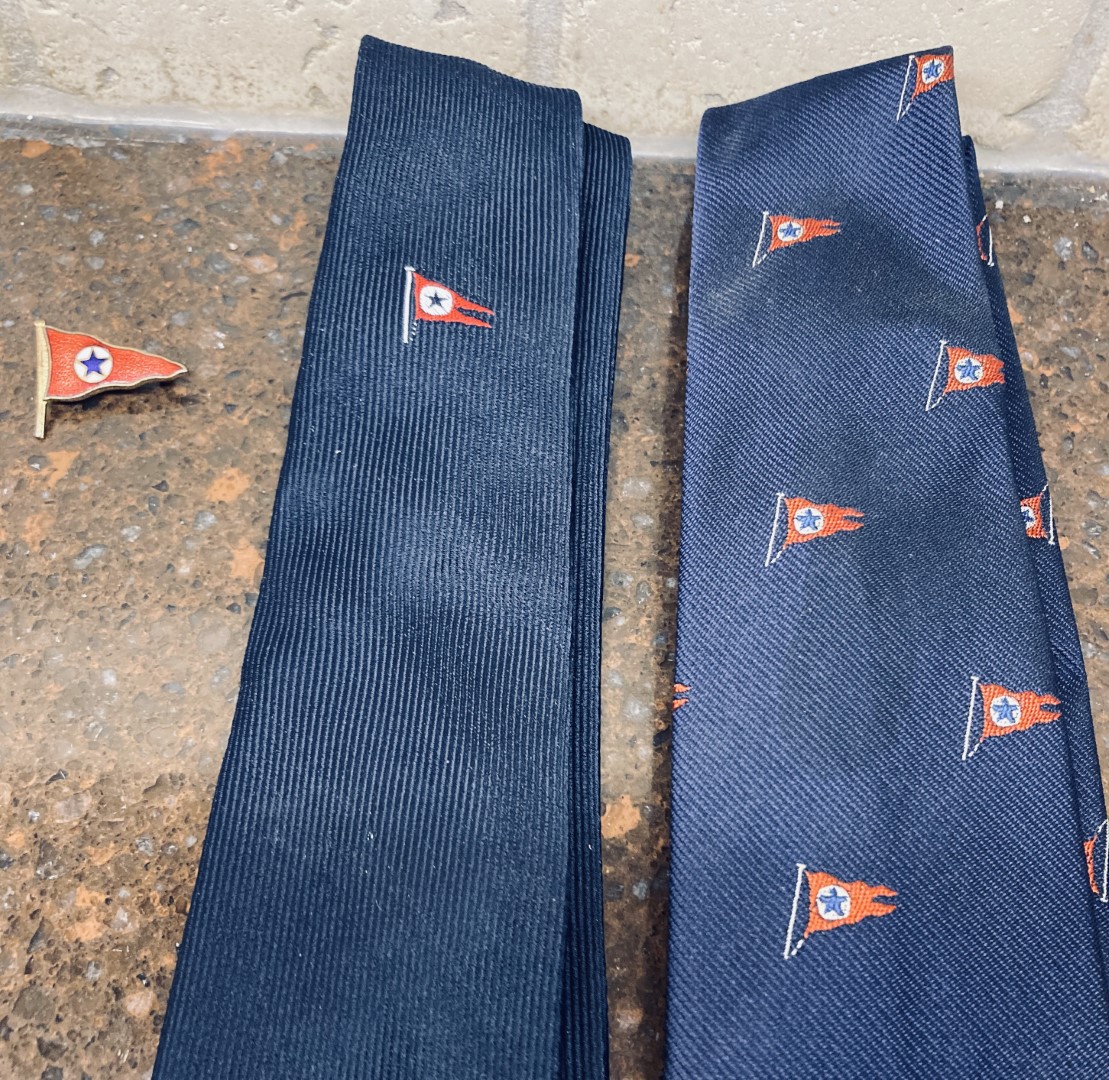
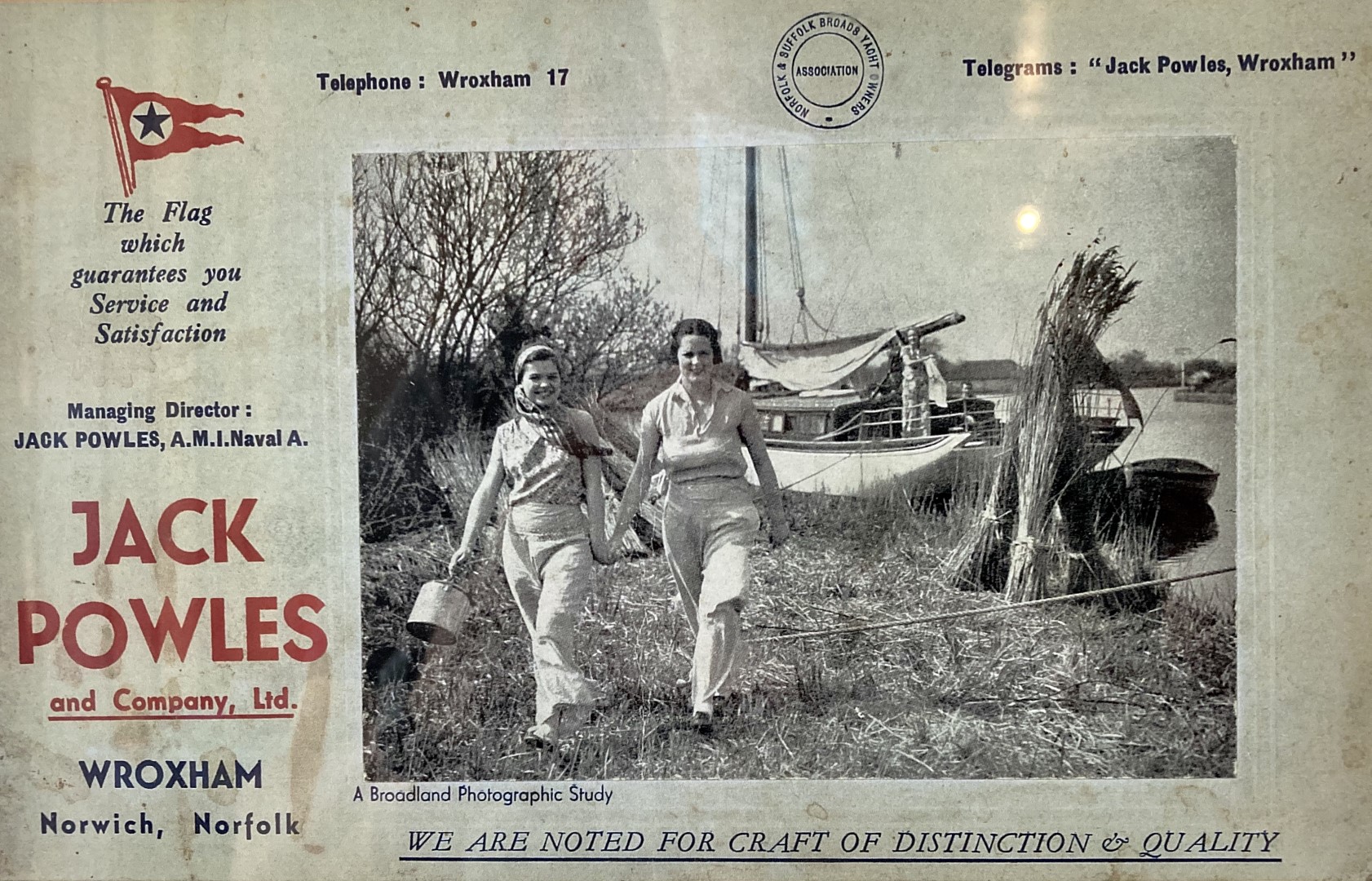
With the change of name, Jack Powles and Co Limited adopted a new pennant for the fleet which Jack claimed was his unique design – a red swallow-tailed pennant bearing a white disc with a blue five pointed star. However, the house flag of the famous shipping company, the Blue Star Line, was identical in design and introduced by them some four years earlier, in 1928.
This culminated in a letter arriving from London Solicitors in 1962, who represented the Blue Star Line, claiming that Jack had copied their design. However Jack responded that he had designed the pennant himself as far back as 1925, and the matter was never heard about again. This event caused some amusement to Young Jack, who in later life enjoyed wearing the tie of the Blue Star Line, after receiving it as a gift from a serving officer of Blue Star.
Even after the passing of 74 years, Young Jack could still recall how stern and demanding his uncle was – having been sent out on a bicycle after midnight to clean out a boat for two demanding ladies who claimed it smelt of petrol, Young Jack received a dressing down from his uncle for not being being at work 8am prompt the following morning.
Ultimately, they came to blows – literally. When Young Jack saw another employee kick one of his uncle’s dogs, he gave him a black eye. Unfortunately, when Jack found out about the black eye, he went beserk, knocking Young Jack to the ground and kicking him. There are usually two sides to a story – indeed his uncle described Young Jack as “a help and a hindrance” – but as a result, Young Jack left the boatyard and went to Norwich. Even though he had a reserved occupation, Young Jack was able to enlist in the Navy, with the help of a young Doctor who kept a boat at the boatyard.
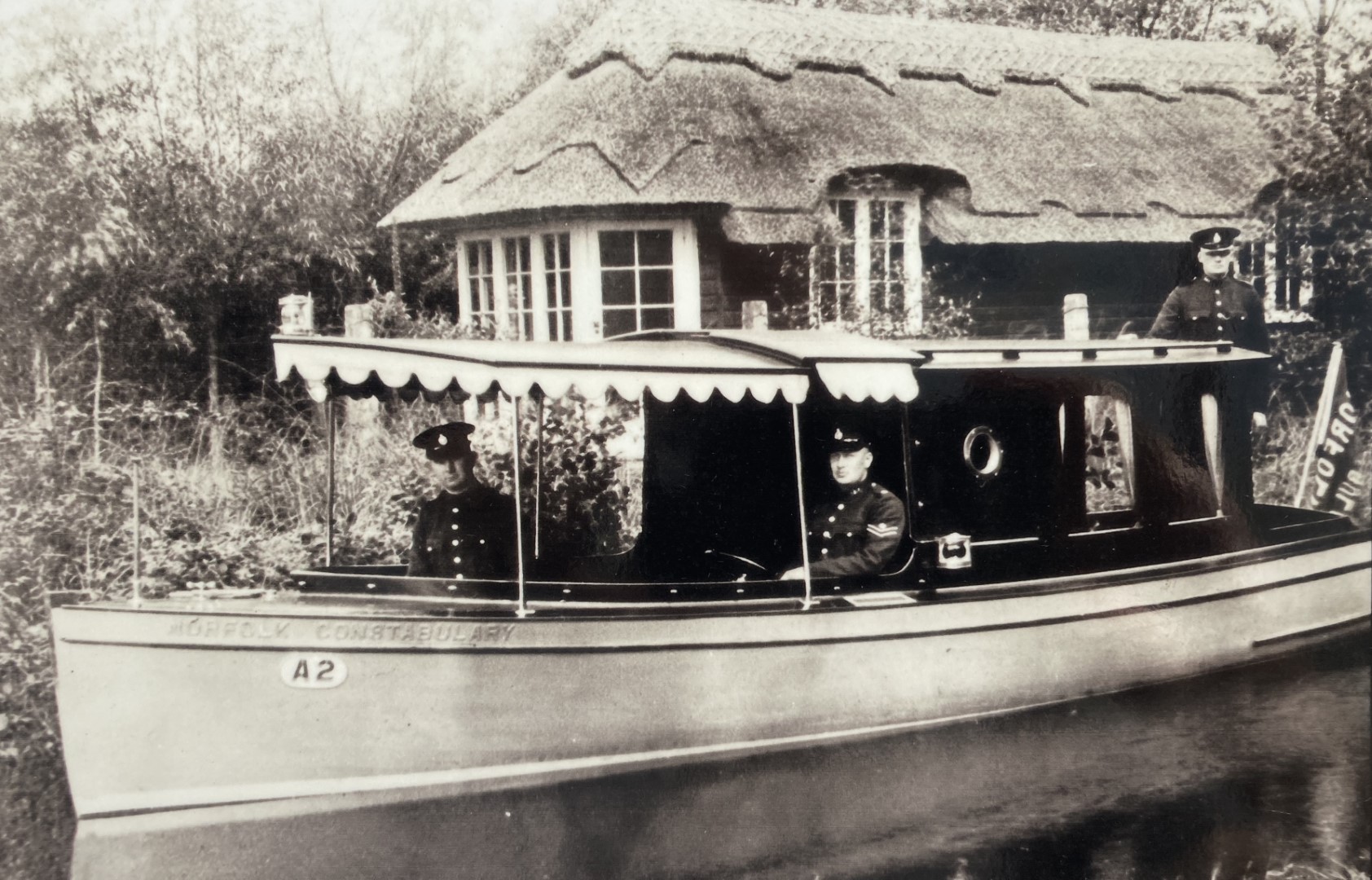
In the 1930’s, Jack Powles built many “gentleman’s launches” for private users – over forty one were built, including one called “Pippin”, in teak. In addition, in 1936 Jack designed and built a launch for Norfolk County Constabulary, “A2” as their first wholly owned craft. They had previously used a hire craft for dealing with incidents of “noise, theft and speeding boats”. The cabin on board enabled officers to sleep on board if they could not return to their base in Horning.

In 1935 Charles Hannaford had acquired William Littleboy’s successful Norfolk Broads Tour Company, which had operated from Powles’ yard next to the bridge, and in 1936, set up a limited company now known as Broads Tours Limited. The new company’s first major decision was to commission Jack Powles to build a one hundred passenger craft, costing £1,100, in 1937.
The boat, made of mahogany with a length of 56 feet, was named “Marina”. Any craft built to take over twelve passengers were subject to very rigorous annual inspections by the Ministry of Transport, and for this very reason, the usual self-drive craft for weekly hire on the Broads has never exceeded twelve passengers.
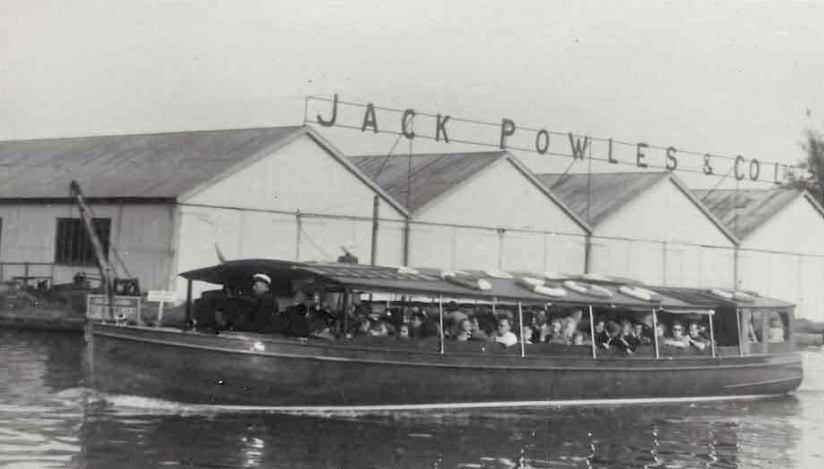
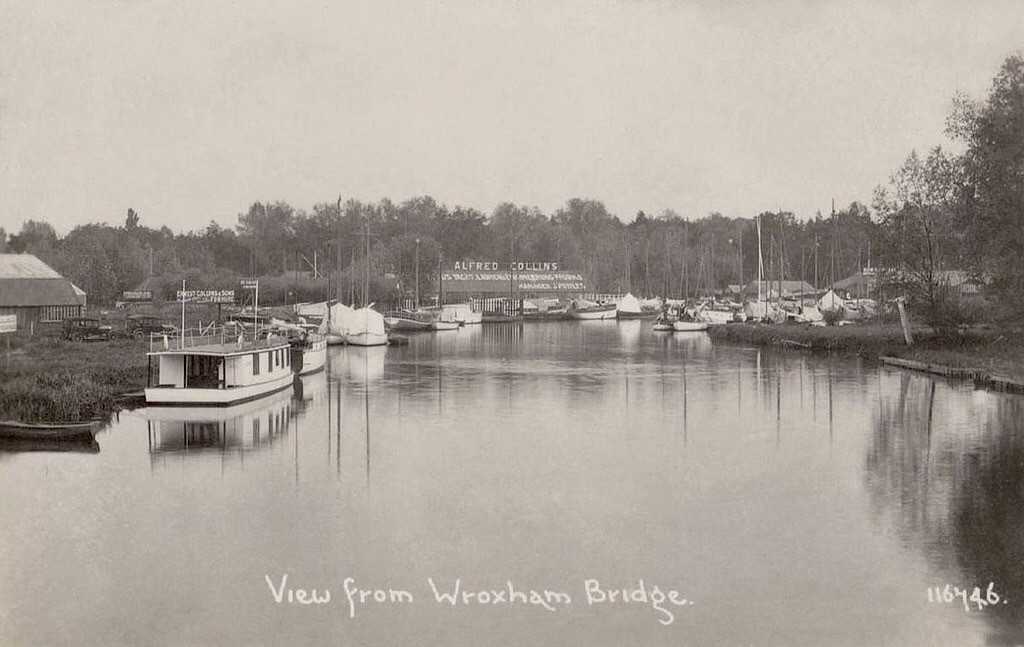
The four span boat shed (pictured above) dominated the skyline as you came over Wroxham Bridge, but it was not used in connection with the hire fleet. It was used purely by Powles for the winter storage and maintenance of many private craft – quite a large and lucrative activity at the time, given the need to store wooden boats under cover in winter.
In the 1930’s, Jack continued to design and build yachts – one notable craft was “White Wings”, built in 1936 for Jack’s fellow Director, Herbert Burrell. Numbered sailing cruiser no. 1, it was a scratch boat, the other being “Maidie”, a famous boat built by Ernest Collins. “White Wings” used the design of the “Westward” yacht that was in the hire fleet, but with a two foot extension in length. It used to win many races on the Broads, and was one of the fastest yachts ever built for the Broads.